

So, you’re ready to dive into tiny living. It’s an exciting thought, but let's be real—the leap from dreaming about it to actually building it can feel huge. Especially when you start looking for tiny home builders near me in Southern North Carolina and realize you need more than just a contractor. You need a partner.
Finding a licensed, experienced builder who gets the local landscape—from specific building codes to community vibes—is the most important decision you'll make. This isn't just about building a small structure; it's about crafting a durable, compliant, and beautiful home.
Finding Your Tiny Home Builder in Southern North Carolina
The idea of a tiny home is simple, but the process has a lot of moving parts. Think smart construction, legal details, and creating a space that truly works for you. Your first big move? Finding a builder who can guide you through all of it.
This is way more than just collecting a few quotes. You need to dig into their past work, check their credentials, and get a feel for what it’s really like to work with them. The goal is to find someone who not only gets your vision but has the chops to make it happen without any ugly, expensive surprises.
The Builder Selection Roadmap
Finding that perfect builder isn’t a mystery; it’s a process. You’ll start with a wide net and slowly narrow it down until you’ve got the right fit.
This simple breakdown shows the three main phases: researching your options, vetting the most promising candidates, and finally, hiring your partner.
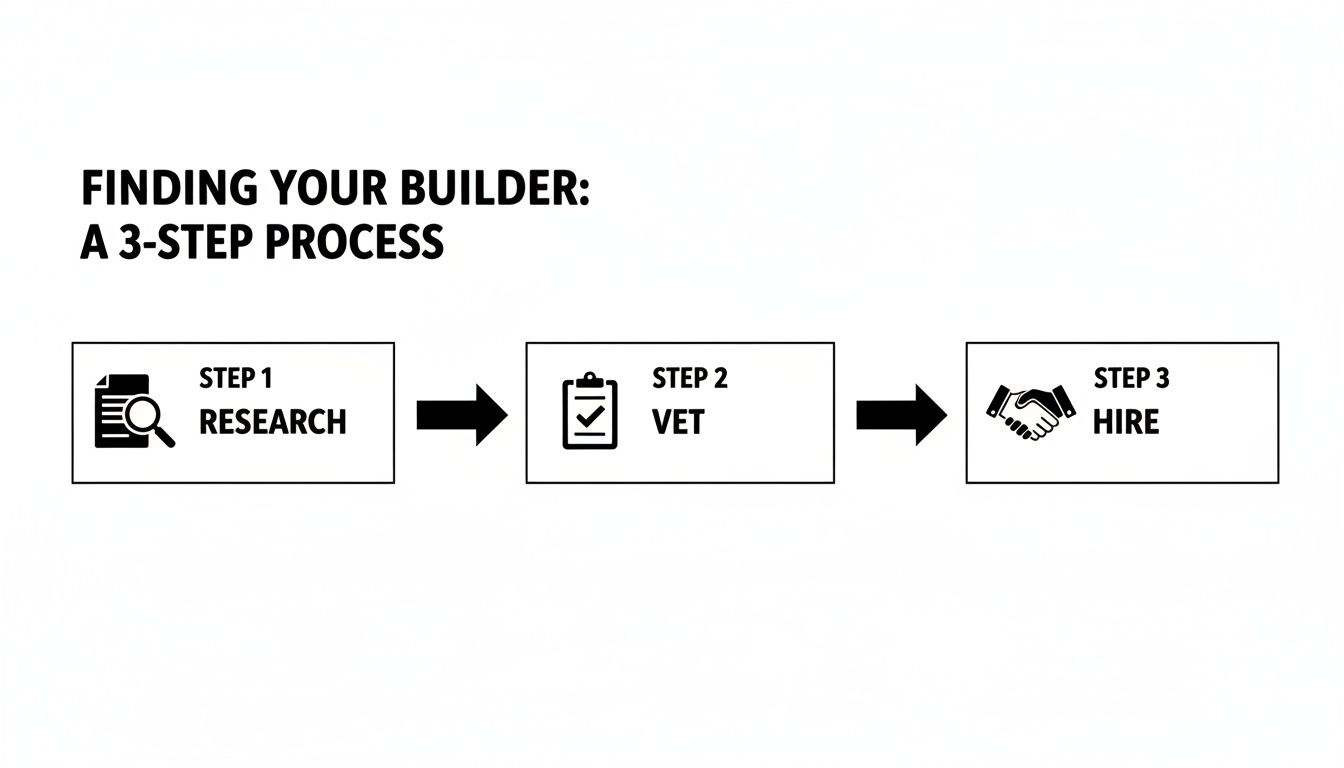
Think of it as a funnel. Each step gets you closer to a confident decision, helping you avoid common headaches and setting your project up for success from day one.
Finding a good partner is especially important now. The tiny home movement isn't a niche trend anymore—it's a serious market. The global tiny homes market was valued at $13.17 billion in 2025 and is on track to hit $17.73 billion by 2030. With so much growth, working with a true professional who knows the ins and outs of quality construction is more critical than ever. You can see more data on the exploding tiny homes market and what’s driving it.
To give you a clearer picture, here’s a quick look at the key stages you'll go through when hiring your builder.
Key Stages in Hiring Your Tiny Home Builder
| Stage | Key Action | Goal |
|---|---|---|
| Research | Gather a list of local builders from online searches, referrals, and industry groups. | Create a longlist of potential candidates who build in your area. |
| Vetting | Check licenses, review portfolios, read reviews, and contact past clients. | Shortlist 2-3 builders who meet your quality and experience standards. |
| Interview & Hire | Conduct detailed interviews, review proposals, and sign a contract. | Select your final builder and officially kick off the project. |
This table simplifies the journey, but remember that the human element is what makes it work. You're building a relationship, not just a house.
A successful tiny home build isn't just about the final product; it's about the partnership you form. A great builder demystifies the process, turning potential challenges like permits and site prep into manageable steps.
Honestly, choosing the right builder is everything. It will directly impact the quality of your home, how smoothly the project runs, and your overall peace of mind. It’s the foundation for your entire tiny living dream.
How to Find Reputable Local Builders
When you're ready to find your builder, it's so easy to just type "tiny home builders near me" into Google and go with the first name that pops up. But let me tell you from experience, finding a truly great builder here in Southern North Carolina takes a little more legwork. The best pros often aren't the ones with the flashiest ads; they're the ones deeply rooted in our local communities.
So, think beyond your screen for a minute. While online research is a fantastic starting point, your next move should be to tap into the local grapevine. This is where a builder's real reputation is made or broken—it gives you a much more honest picture than a polished website ever could.
Beyond a Basic Search
To put together a solid list of potential builders, you've got to mix some digital sleuthing with good old-fashioned, real-world intel. This approach helps you find contractors who are not only skilled but are genuinely trusted by their peers and past clients.
Here are a few strategies that have never failed me:
- Check with the Home Builders Association: Your local HBA chapter is a goldmine. Their members are usually vetted pros who are serious about their craft and the local industry.
- Visit Fayetteville-Area Trade Shows: I love a good home and garden show. They're the perfect place to meet builders face-to-face, see their work up close, ask some initial questions, and just get a feel for their personality.
- Ask for Referrals at Local Lumber Yards: This is a pro tip. The folks at the supply yard know who pays their bills on time and who consistently buys quality materials. A quick chat with them can give you some of the most candid referrals you'll ever get.
Digging into Their Digital Footprint
Once you have a few names, it’s time to head back to the computer and check out their online presence. A builder’s digital footprint can say a lot about their work quality, how they communicate, and what their clients really think. You're looking for consistency and transparency.
A builder's portfolio is their resume. Look for detailed project galleries with high-quality photos showing tiny homes they have built, not just generic stock images. This demonstrates genuine experience in your specific type of project.
Next, it’s time to play detective with their reviews. Scour feedback on Google, Houzz, and their social media pages. Pay close attention to how they handle comments—both the glowing ones and the not-so-great ones. A thoughtful response to criticism is a huge green flag for customer service. This is all just one piece of the puzzle; we have even more tips in our guide on how to choose a general contractor.
The tiny home market is absolutely booming right now. The North American market was valued at $326.08 million in 2024 and is expected to grow at a staggering 19.4% each year through 2031. With this kind of rapid growth, you need to be sure you're partnering with a builder, like us at FHP Contracting, who has a proven track record and knows how to navigate this exciting and complex industry. You can discover more insights about the rapid growth of the tiny homes market and what it means for consumers.
Vetting Your Shortlist and Spotting Red Flags
Alright, you've done your homework and narrowed down the list of potential builders. This is where the real work begins—the due diligence phase. Think of it as moving from window shopping to a full-blown inspection. This is the single most important step to protect your investment, your land, and frankly, your sanity.

Before you talk about anything else, you need to verify their license. In our area, a builder must have a valid license with the North Carolina Licensing Board for General Contractors. This isn't just a piece of paper; it's your assurance that they've met the state's minimum requirements for competency and financial stability. Hiring an unlicensed builder leaves you with zero recourse if things head south.
Next up, insurance. Ask to see certificates for both general liability and workers' compensation. Any legitimate, professional builder will have these documents ready to go. If they get defensive or hesitate, that's a huge red flag. An accident on your property without proper coverage can turn into your financial disaster, not theirs.
Identifying Common Builder Red Flags
A great builder is an open book. A shady one, on the other hand, always leaves clues. After years in this business, we've seen it all. Here are the warning signs that should make you walk away, no questions asked:
- Vague Contracts: They’re fuzzy on the details or resist putting everything in writing. A solid contract protects you and them, and any builder who avoids one is avoiding accountability.
- Huge Cash Deposits: This is a classic. If they demand a massive cash payment upfront, run. A typical down payment is around 10%, with the rest of the payments tied to specific, completed milestones.
- No Recent References: They can't or won't connect you with happy, recent clients. A builder who does good work will have a line of past customers happy to sing their praises.
- No Real Business Address: A P.O. box isn't enough. You need to know they have a physical office or workshop—a place you can actually find them if a problem comes up.
Beyond these concrete points, you have to trust your gut. If a builder seems pushy on price, rushes you to sign, or just feels "off," it’s better to move on. The relationship you have with your builder is a partnership, and it has to start with trust and clear communication.
A builder's refusal to provide a detailed, itemized contract is not just unprofessional—it's a deliberate attempt to avoid accountability. Never proceed without a written agreement that clearly defines every aspect of the project.
Remember, a quality build always starts with a quality contractor. Doing your homework now is the best way to ensure your project goes smoothly. To get a better sense of what a professional process involves, take a look at our construction quality control checklist for more insights. Taking these steps seriously will give you peace of mind that your tiny home dream is in truly capable hands.
Alright, you’ve sorted through portfolios and online reviews. Now it’s time to actually talk to a builder. This is where the rubber meets the road.
Think of this conversation less like a stuffy job interview and more like a first date. You're trying to see if your personalities, communication styles, and vision for the future—your tiny home's future, that is—are a match. Going in with a solid list of questions is the best way to make sure you cover your bases and can compare builders on a level playing field.
Digging into Their Experience and Process
You want to start by getting a feel for their actual, hands-on experience building tiny homes. General construction is one thing, but tiny living has its own set of rules. It’s a specialized craft that involves smart space-saving designs, unique material considerations, and a whole different way of thinking.
Here are the questions I always recommend starting with:
- "Can you show me 2 or 3 tiny homes you've built that are similar to my vision?" This gets them talking specifics. You want to hear about the challenges they ran into and, more importantly, how they solved them.
- "How do you handle the design phase? Am I working with your designer, an architect you partner with, or do I need to bring my own finished plans to the table?" This is huge for understanding their workflow and how much creative input you'll really have.
- "From the day we sign the contract to the final walkthrough, what's a realistic timeline for a home like mine?" Listen carefully here. A vague answer can be a red flag that they're overbooked or bad at project management.
Talking Logistics and Local Know-How
Once you feel good about their building chops, it's time to get into the nitty-gritty, especially the parts that are specific to building here in Southern North Carolina. A builder's local knowledge (or lack thereof) can make or break your project timeline and budget.
I've seen it time and time again: the most expensive part of any build is a mistake. Asking tough questions about local permits and inspections isn't just you being difficult—it's preventing costly delays and rework down the road.
Make sure you get clear answers on these logistical points:
- "How familiar are you with the tiny home zoning laws and building codes right here in [Your City/County]?" This is a non-negotiable. An expert local builder, like our team at FHP Contracting, lives and breathes the codes in places like Fayetteville and Cumberland County.
- "Do you have a go-to team of subcontractors—plumbers, electricians, etc.—or do you hire new crews for each project?" An established team usually means more reliability and a consistent quality of work.
- "What’s your main way of keeping clients in the loop? Weekly calls? A project management app? How often will I hear from you?" Their answer doesn't matter as much as whether their system works for you.
A builder who can confidently walk you through these details isn't just selling you a structure; they're showing you they can manage a complex project from start to finish. When someone can "demystify what it takes to build a house," as one of our clients put it, you know you've found a partner you can trust.
Comparing Builder Estimates and Services
Once you've interviewed a few builders, you'll have a stack of proposals and a head full of information. To make a true apples-to-apples comparison, you need to organize it all. A simple chart can be a lifesaver here, preventing you from just going with the cheapest quote, which is rarely the best value.
Use this table to line up the details side-by-side. Pay close attention not just to the bottom-line price, but to what's actually included in that price.
| Evaluation Criteria | Builder A | Builder B (e.g., FHP Contracting) | Notes |
|---|---|---|---|
| Total Estimated Cost | |||
| Cost Per Square Foot | Helps compare different sized plans | ||
| Included Services | Design, permits, site prep, etc.? | ||
| Material/Finish Allowances | Are they realistic or low-ball? | ||
| Projected Timeline | |||
| Warranty Details | What's covered and for how long? | ||
| Communication Plan | Weekly calls, app updates? | ||
| Local Code Familiarity | Specific examples? | ||
| Overall Vibe/Fit | Your gut feeling is important! |
Looking at the information this way forces you to move past the initial sticker shock or a slick sales pitch. You might find that the slightly more expensive builder includes a comprehensive warranty and a higher-quality materials package, saving you money and headaches in the long run. It’s all about finding the best overall partner for your project.
Understanding Contracts, Costs, and Warranties
Alright, you've interviewed a few builders and you're ready to move forward. This next part is a huge step—going from conversations and handshakes to a formal contract. This is where all the financial and legal details get hammered out, and frankly, it's where a dream project can turn into a real headache if you're not careful.
Your contract is the single most important document you'll have. Think of it less like a formality and more like a detailed game plan for the entire build. It should cover everything from when you pay to the specific brand of windows being installed. A good builder will expect you to have questions and will take the time to make sure you understand every single line.
Decoding the Contract and Payment Structure
A fair contract protects everyone. It clearly lays out what you're responsible for and exactly what the builder has promised to do. The most critical piece of this is the scope of work. This shouldn't be a vague, one-sentence summary; it needs to be an exhaustive list of every single task the builder is going to handle.
Just as important is the payment schedule. A professional builder will never ask you to pay for the entire project upfront. Payments should be broken down and tied to real, verifiable progress on your home.
Here’s what a typical schedule looks like:
- Initial Deposit: This is usually 10-15% of the total cost. It gets you on the builder's schedule and covers the first round of material orders.
- Foundation Complete: Once the foundation is poured and passes inspection, another payment is due.
- Framing and Dry-In: The next draw happens after the skeleton of your home is up and it's protected from the weather.
- Final Payment: You'll pay the remaining balance only after you've done a final walkthrough with your builder and you're completely happy with the result.
This milestone-based approach keeps the project moving and protects your money. If any contractor is pushing for large cash payments or a vague payment plan, you should see that as a major red flag.
The most expensive part of any construction project is ambiguity. A contract that leaves room for interpretation is a recipe for budget overruns and disputes. Demand absolute clarity on materials, labor, and timelines before you sign.
Handling Changes and Understanding Warranties
Even with the most detailed plans, things change. You might fall in love with a different countertop or decide you want to add an extra window halfway through. That's perfectly normal, and these adjustments are handled through change orders.
A change order is just a simple document that outlines the new work, what it will cost (or save), and how it might affect the timeline. Any pro builder will require a signed change order before starting the new work. It just keeps everyone on the same page and avoids surprise costs at the end.
Finally, let's talk about warranties. Every new build should come with two kinds of protection:
- Workmanship Warranty: This is the builder's guarantee on their own labor. Here at FHP Contracting, for instance, we provide a one-year workmanship warranty that covers the quality of our construction.
- Manufacturer Warranties: These cover the actual products used in your home—think roofing, windows, appliances, and so on. Your builder should hand over all the original paperwork for these items so you can register them.
Getting these financial and legal safeguards right is just as important as the build itself. It ensures that when you hire one of the tiny home builders near me, you’re building a partnership, not just a house. Of course, a solid home starts with a solid foundation, and that begins with preparing the land. You can see how we handle that crucial first step in our guide to site clearing services. A well-prepared site and a rock-solid contract are the one-two punch for a project that goes off without a hitch.
Alright, you've done the homework. You know what to look for in a builder and, just as importantly, what red flags to run from. The final piece of the puzzle is finding a team you genuinely trust to bring your tiny home vision to life right here in Southern North Carolina.
That’s where we come in.
When you're searching for “tiny home builders near me,” you need more than just a contractor. You need a local partner. At FHP Contracting, we're a licensed, bonded, and insured general contractor with over 13 years of hands-on experience building in this community. We don’t just put up walls; we build relationships and homes meant to last.
Quality and Compliance, Handled
Building in the Fayetteville area comes with its own unique set of rules. We get it. Our years of experience mean we have a rock-solid grasp of the local zoning laws and permitting requirements that can trip up less experienced builders.
We manage all that paperwork and red tape for you. This frees you up to focus on the exciting parts of the build, knowing that everything is being handled correctly and your project will be fully compliant from the ground up.
A successful build is really a partnership. It’s built on trust and clear communication. We make sure you’re in the loop every step of the way—from the first sketch to the day we hand over the keys. No jargon, no surprises.
Our commitment to you doesn’t end when the project is finished. We stand behind every home we build with a comprehensive one-year workmanship warranty, giving you complete peace of mind. It’s our promise of quality. To see what this looks like in practice, you can get a feel for our approach to building a custom home.
Ready to get started with a team you can count on? Reach out to FHP Contracting today, and let's talk about your project in a free consultation.
Answering Your Top Tiny Home Questions
Jumping into the world of tiny homes is exciting, but let's be honest—it also comes with a mountain of questions. Especially when you're trying to figure out local rules and what a project really looks like here in Southern North Carolina. We get it. Here are the straight-up answers to a few questions we hear all the time.
What Are the Zoning Laws for Tiny Homes in Southern NC?
This is the big one, and the honest answer is: it's complicated. Zoning rules can feel like they change the second you cross a county line. Some towns are happy to classify a tiny home as an Accessory Dwelling Unit (ADU), while others are more focused on whether it’s on a permanent foundation or on wheels.
For instance, the rules for setting up a tiny home in Fayetteville are going to be a world away from what you’ll find in a more rural corner of the county, especially around things like utility hookups and minimum square footage. This is exactly why you need a local builder in your corner. We’ve been down these roads before and know how to make sure your project is above board from the very beginning.
How Long Does It Really Take to Build a Custom Tiny Home?
From the first sketch to the final walkthrough, a custom build usually takes somewhere between 3 and 9 months. That might sound like a huge range, but it all depends on the complexity of your design and how busy the local permitting office is.
Here’s a rough breakdown of what that timeline looks like:
- Design & Planning: We’ll spend about 4–8 weeks nailing down your layout and finishes.
- Permitting: This is the wild card. It can take anywhere from 4–12 weeks, depending on the municipality.
- Construction: The actual build-out in our shop typically takes 8–16 weeks.
Any good builder will give you a detailed project schedule right in the contract, so you’re never left guessing what’s next.
A quick heads-up: things like freak weather or a sudden shortage of a specific material can throw a wrench in the schedule. The difference between a good builder and a great one is communication. We’ll let you know about any hiccups immediately and already have a plan to deal with them.
Can I Get Financing for My Tiny Home?
Absolutely. While you probably won't be getting a conventional 30-year mortgage, there are plenty of solid financing routes. We see clients go with personal loans, RV loans (which work great for tiny homes on wheels), or even financing programs offered directly through a builder.
Ready to stop dreaming and start building with a local team you can trust? The crew here at FHP Contracting has seen it all and we’re ready to guide you through every step. Contact us today for a free consultation and let's start mapping out your dream tiny home.