

Before you can even think about pouring a foundation or framing a wall, you have to deal with the land itself. That's where site clearing comes in—it’s the absolute first move in any construction game, clearing away trees, junk, and any other obstacles to get the ground ready for building. It’s a whole process that makes sure your site is a safe, stable, and properly graded canvas to build on.
Why Professional Site Clearing Is the First Critical Step
Picture your property as a blank canvas. An artist can't just start slinging paint; the canvas has to be prepped and ready. In construction, site clearing services do that exact job, turning a wild, overgrown piece of land into a site that’s ready to go. And believe me, it's way more than just knocking down some trees or pushing dirt around.
It's a methodical, careful operation that sets the stage for everything that comes after. If the site isn't cleared right, you're setting yourself up for a world of hurt down the road—expensive, dangerous problems. We're talking about things like poor drainage flooding your new foundation or unstable soil causing ugly structural cracks years later.
More Than Just Removing Trees
Sure, getting rid of trees and bushes is a big part of it, but a professional crew handles so much more. The real goals are to create a safe place for workers and build a solid base for the structure.
You can expect the job to include:
- Vegetation Removal: Taking out all the trees, shrubs, stumps, and undergrowth that are in the way of your building plans.
- Debris and Structure Demolition: Tearing down and hauling off any old buildings, leftover foundations, or just plain junk that’s cluttering up the site.
- Grading and Resloping: Carefully shaping the land to control water flow and create the exact elevations your building plans call for.
- Soil Stabilization: Compacting the soil to create a firm, reliable pad that can handle the massive weight of a foundation.
A professional site clearing contractor doesn't just clear the land; they engineer the very ground your project will stand on. The stability and longevity of your investment literally start from the soil up.
The Foundation of Project Success
Hiring a professional for site clearing is really an investment in managing risk. A contractor who knows the ropes, like our team at FHP Contracting, understands the specific soil conditions and local rules right here in Southern North Carolina. That kind of local knowledge is what keeps you from hitting costly delays because of permit mix-ups or nasty surprises with the ground itself.
For any new build, whether it's a commercial building or a custom home, getting this first step right is non-negotiable. If you're building something a bit different, like a barndominium, a solid foundation is even more critical. You can learn more about barndominiums and why their foundations are so important in our other guide. When you make sure the ground is perfectly prepared from day one, you put your entire project on the path to success.
The Professional Land Clearing Process From Start To Finish
Turning a raw, overgrown piece of land into a build-ready site is a lot more than just a weekend job with a chainsaw. It's a precise, multi-stage process where every single step builds on the last one. Get one part wrong, and it can throw the whole project off. The journey from a tangled mess to a clean slate involves careful planning, some serious heavy machinery, and a whole lot of attention to detail.
It all starts with getting to know the property, and I mean really know it. This isn’t just a quick walk-through. A professional contractor will kick things off with a thorough site assessment and land survey to map out the terrain in detail. This first step is all about identifying property lines, figuring out where existing utilities are buried, and spotting challenges like steep slopes, drainage nightmares, or protected trees. Think of it as creating a detailed battle plan before the first engine even starts.
Securing Approvals And Preparing For Work
Once we understand the lay of the land, it's time to tackle the paperwork. This is easily the most overlooked—and most critical—part of any site clearing services job. Here in North Carolina, most projects will require permits for land disturbance, erosion control, and sometimes demolition if there are old structures. An experienced team like FHP Contracting handles all of this, making sure every move complies with local and state environmental rules.
This stage also involves putting a solid erosion and sediment control plan in place. You’ll see things like silt fences going up around the property’s perimeter. They aren't just for show; they're required safeguards that keep soil and runoff from messing with neighboring properties and waterways while we work.
A project's success is often determined before the first tree is felled. Proper permitting and environmental planning prevent costly fines and delays, ensuring a smooth transition from planning to physical work.
The Physical Clearing And Debris Management
With the permits approved, the real fun begins. The physical clearing is what most people picture: the rumble of equipment and the dramatic change from wilderness to open space. It’s a carefully orchestrated operation, tailored to what your specific property needs.
- Vegetation Removal: This is where you see the biggest change, fast. Crews use heavy equipment to take down trees, thick underbrush, and shrubs in the designated building area.
- Stump Grinding and Removal: Just cutting a tree leaves its root system, which is a big no-no. Over time, those roots rot and create empty pockets under your future foundation. We use specialized stump grinders to pulverize them well below ground level, taking that risk completely off the table.
- Demolition of Existing Structures: If the property has an old barn, a crumbling foundation, or other junk you want gone, we safely knock it down and haul it away during this phase.
- Debris Hauling and Disposal: Everything we clear—logs, brush, concrete, you name it—gets sorted and hauled off. We’re big on recycling. Green waste often gets turned into mulch, and old concrete is sent to be crushed and reused.
This flow chart really breaks down how these core steps all lead to a stable foundation for any building project.
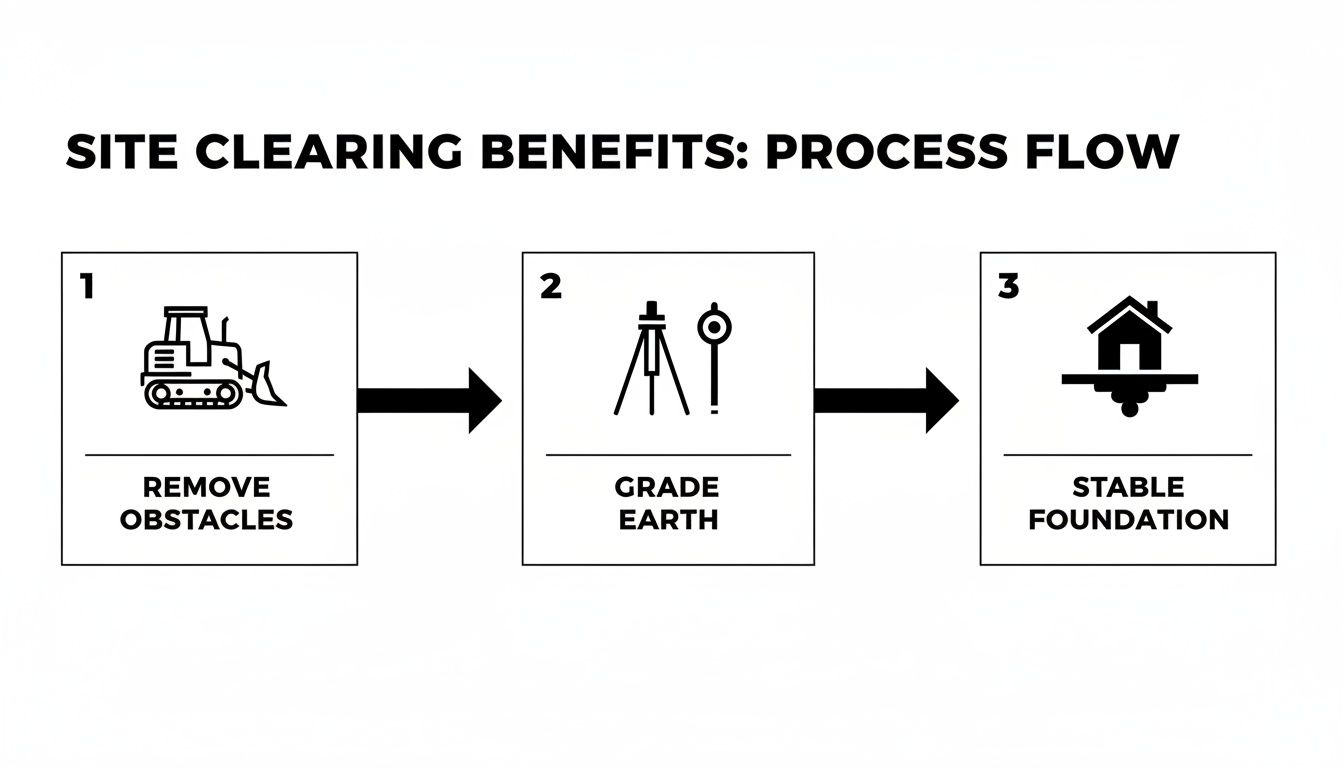
You can see how removing the physical junk is just the first step. The earthwork that follows is what really sets the stage, giving you that solid base you need to build on.
Final Grading And Site Preparation
The last, and maybe most important, stage is getting the building pad perfect. After all the debris is gone, the land is still far from ready. We have to grade the site with absolute precision to make sure water drains properly, flowing away from your future foundation. This means cutting into high spots and filling in the low ones to hit the exact elevations laid out in the building plans.
Once the grading is right, we bring in the heavy rollers for compaction. This step is all about increasing the soil's density, creating a firm, stable base that won’t settle or shift under the immense weight of a building. A properly compacted building pad is the true hallmark of professional site clearing services and the final move in turning a wild plot of land into a project-ready site.
The Essential Heavy Equipment in Modern Site Clearing
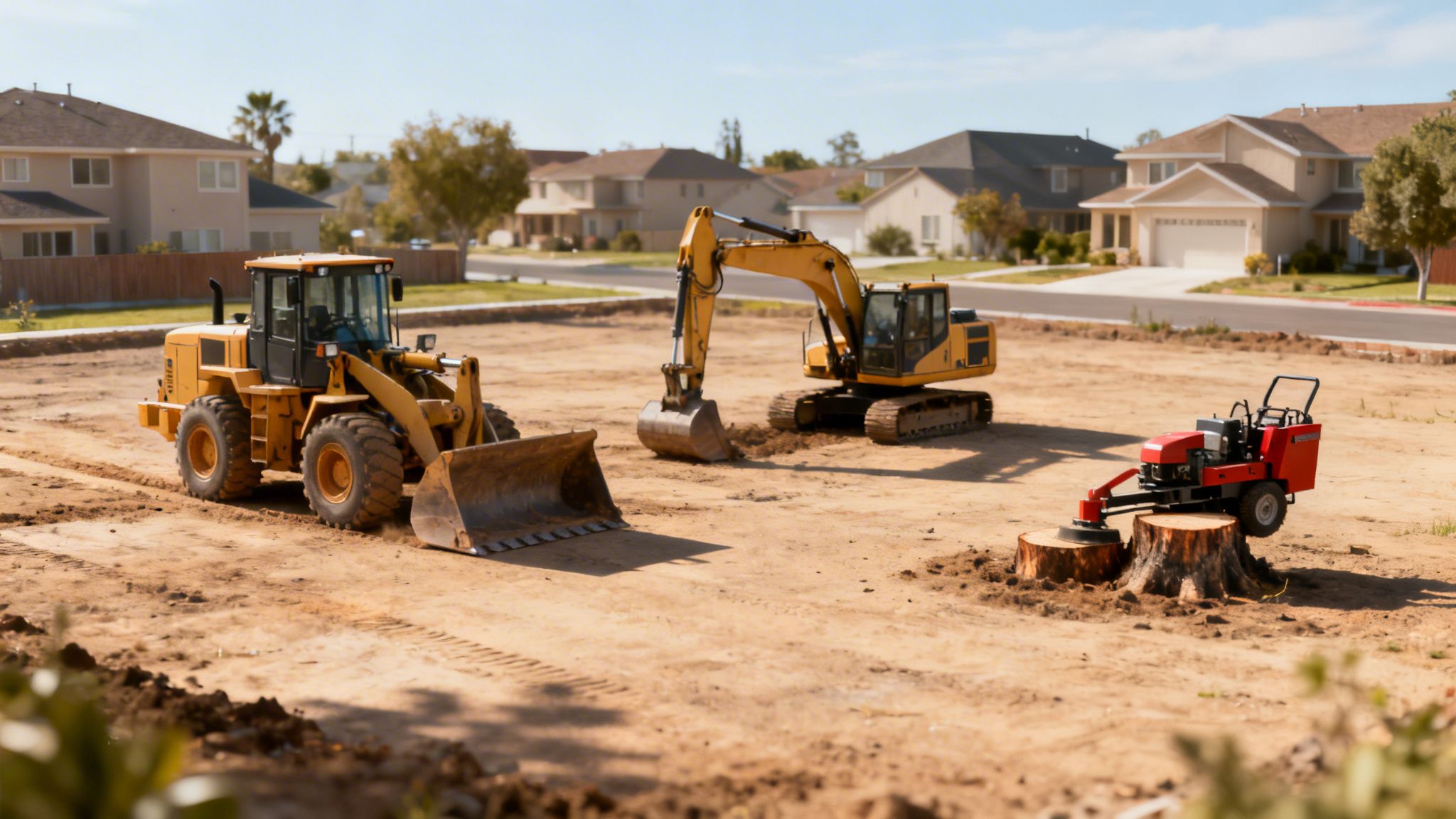
Clearing a piece of land isn't just about raw power; it's about having the right tool for the job. You can think of a professional clearing contractor as a surgeon and their fleet of heavy equipment as a set of highly specialized instruments. Each machine has a distinct role, and picking the right one means the job gets done efficiently, safely, and with as little disruption as possible.
The specific lineup of equipment we roll out to a site really depends on the property itself. A tight residential lot in Fayetteville might only need some compact, nimble machinery. But a big, sprawling commercial tract? That calls for the whole arsenal of heavy-duty earthmovers. Making that strategic choice is what separates the pros from the amateurs.
The Primary Earthmovers
These are the workhorses of any land clearing project, the machines built to move massive amounts of earth, trees, and junk. They do the heavy lifting and start reshaping the land into a clean slate.
- Bulldozers: The absolute powerhouses. A dozer is what you bring in to push over trees, plow through dense brush, and handle the initial rough grading that sets the basic contours of the property. For large-scale clearing, their brute strength is essential.
- Excavators: While bulldozers bring the muscle, excavators bring the precision. That long arm, fitted with a bucket or a grapple, lets them dig foundations, pull out massive tree stumps, tear down old sheds, and carefully load debris into haul trucks. They’re incredibly versatile.
- Skid Steers and Compact Track Loaders: Think of these as the MVPs of tight spaces. They're perfect for residential jobs or commercial sites with tricky access. We use them for clearing smaller debris, grading in confined areas, and zipping around with materials. Their agility is amazing.
Here's the thing: The real skill isn't just in running the machine. It's knowing which combination of equipment will get the job done on time and on budget. Using a machine that's too small just wastes a ton of time, while bringing in one that's too big can cause unnecessary damage to the site.
Specialized Tools for Finer Details
Once the bulk of the clearing is done, we bring in the specialty tools to handle the finishing touches. These machines tackle the specific problems that the big earthmovers can't, making sure the site is truly ready for whatever comes next.
For example, just cutting a tree down isn't good enough. You've got to deal with the stump and its root system. That's where a stump grinder comes in. This machine has a high-speed cutting wheel that just pulverizes the stump and its major roots into small wood chips. This gets rid of the stump and prevents future problems like ground settling or termites.
Another key player is the forestry mulcher or brush cutter. We can attach these to a skid steer to shred smaller trees and thick undergrowth right on the spot. This process turns all that green waste into a natural layer of mulch, which helps stop erosion and puts nutrients back into the soil. It's a much smarter, more eco-friendly way to clear.
Technology's Role in Modern Site Clearing
The best site clearing services today rely on more than just heavy iron. Technology has become a game-changer, seriously boosting our accuracy and speed. At FHP Contracting, we lean on these advanced tools to get better results for our clients.
- GPS-Guided Grading: Our dozers and graders can be equipped with GPS technology that lets us shape the land to exact elevations—we're talking centimeter-level accuracy. This guarantees perfect drainage and flawless foundation pads.
- Drone Surveys: Before we even start the engines, we can fly a drone over the property to create incredibly detailed 3D maps. This data helps us map out the most efficient clearing strategy and get a dead-on estimate of how much material needs to be moved.
It’s this mix of powerful machinery and smart technology that really defines modern site clearing. It's how we make sure every single project starts on a foundation that's perfectly prepped, stable, and graded with absolute precision.
Figuring Out Site Clearing Costs and Timelines
When people start thinking about a land clearing project, two questions always pop up first: "How much is this going to cost?" and "How long will this all take?" Totally fair questions. Getting a straight, realistic answer is the only way you can budget and plan properly. For site clearing services, that final price tag and schedule aren't just numbers we pull out of a hat; they come from a careful look at what makes your property unique.
Think of it like planning a road trip. The final cost and how long it takes to get there depend on the distance, the kind of car you're driving, the roads you'll be on, and any surprise detours. Site clearing is pretty much the same. A simple, flat one-acre lot with just some light brush? That’s like a straightforward drive down the highway. But a hilly, five-acre piece of land, thick with trees and an old barn that needs to come down? That’s a whole different journey—more like a cross-country trek over mountain passes.
Key Factors Driving Your Project Costs
The final quote you get for clearing your land boils down to the labor, equipment, and time it’s going to take to do the job right. A few key things have the biggest impact on that bottom line. Once you understand them, you'll see why one project might cost a whole lot more than another.
- Property Size and Accessibility: The most obvious one is the total acreage. More land means more time and more fuel, plain and simple. But just as important is how easily we can get our heavy equipment onto and around the site. A tight, fenced-in property might mean we have to use smaller, less efficient machines, which bumps up the labor hours.
- Vegetation Density: What’s actually on the land matters a ton. A property with some sparse grass and a handful of small trees is a piece of cake. A site that’s choked with dense undergrowth and dozens of big, mature hardwood trees is a completely different animal, demanding more powerful equipment and a lot more time for processing and hauling everything away.
- Demolition Requirements: Got an old shed, a crumbling foundation, or some other abandoned structure on the property? Tearing down and removing these obstacles adds a whole other layer to the job. It requires specialized equipment and a solid plan for disposing of materials like concrete and metal the right way.
- Terrain and Soil Conditions: A flat, level lot is always the easiest and cheapest to work on. Steep slopes, rocky soil, or swampy areas all make the project more complex and add risk. These kinds of tough conditions often require more specialized machinery and some extra careful planning to keep everyone safe and get the grading done correctly.
This whole process is a crucial first step in a massive global industry. The global site preparation market, which covers all the essential groundwork from clearing land to demolition, was valued at USD 271.8 billion back in 2025 and is expected to climb to USD 517.6 billion by 2034. You can explore more data about this expanding market to see how your own project fits into the bigger picture.
Estimated Costs and Timelines in North Carolina
To give you a more concrete idea of what to expect, here are some typical ranges for projects we see around Southern North Carolina. Just remember, these are ballpark estimates; your specific project will vary based on all the factors we just talked about. A formal, on-site quote from a contractor like FHP Contracting is the only way to get an exact figure.
Here are a few common scenarios to help you get a feel for potential costs and timelines in our area.
Estimated Site Clearing Cost and Timeline Examples
This table provides sample cost ranges and typical timelines for site clearing projects in the Southern North Carolina area. Note that these are estimates and actual costs vary based on specific site conditions.
| Project Type | Typical Size | Estimated Cost Range | Estimated Timeline |
|---|---|---|---|
| Residential Lot Clearing | 0.5 – 1 Acre | $2,500 – $7,000 | 1 – 3 Days |
| Small Commercial Site | 2 – 3 Acres | $8,000 – $20,000 | 3 – 7 Days |
| Large Development Tract | 5+ Acres | $25,000+ | 1 – 4+ Weeks |
| Lot with Demolition | Varies | Add $4,000 – $15,000+ | Add 1 – 5 Days |
Getting a detailed, itemized quote is the absolute best way to manage your budget. A transparent quote lays out the full scope of work, which means no surprise costs down the road and ensures you and your contractor are on the same page from day one.
What Influences Your Project's Schedule
Beyond the physical work itself, a few outside factors can stretch your project's timeline. Any good contractor will anticipate these and build some buffer time into the schedule, but it's still important for you to know what they are.
- Permitting and Approvals: Before a single machine touches the ground, we have to get the right permits from the local authorities. How long it takes for those applications to get reviewed and approved can range from just a few days to several weeks, depending on how busy the city or county office is.
- Weather Conditions: North Carolina weather can be a wild card. Heavy rain can turn a site into a soupy mess, making it impossible to operate heavy machinery safely or effectively. That can lead to delays until the ground dries out enough for us to get back to work.
- Unexpected Site Discoveries: Every now and then, we uncover surprises buried underground—things like old septic tanks, unknown utility lines, or huge rock formations. Taking care of these discoveries properly takes time and can mean adjusting the original schedule.
By understanding what drives the cost and what can affect the timeline, you can go into your site clearing project with your eyes open and with realistic expectations. Partnering with an experienced contractor ensures all these factors are managed professionally, keeping your project on track and on budget.
Navigating Permits, Environmental Rules, and Safety Standards
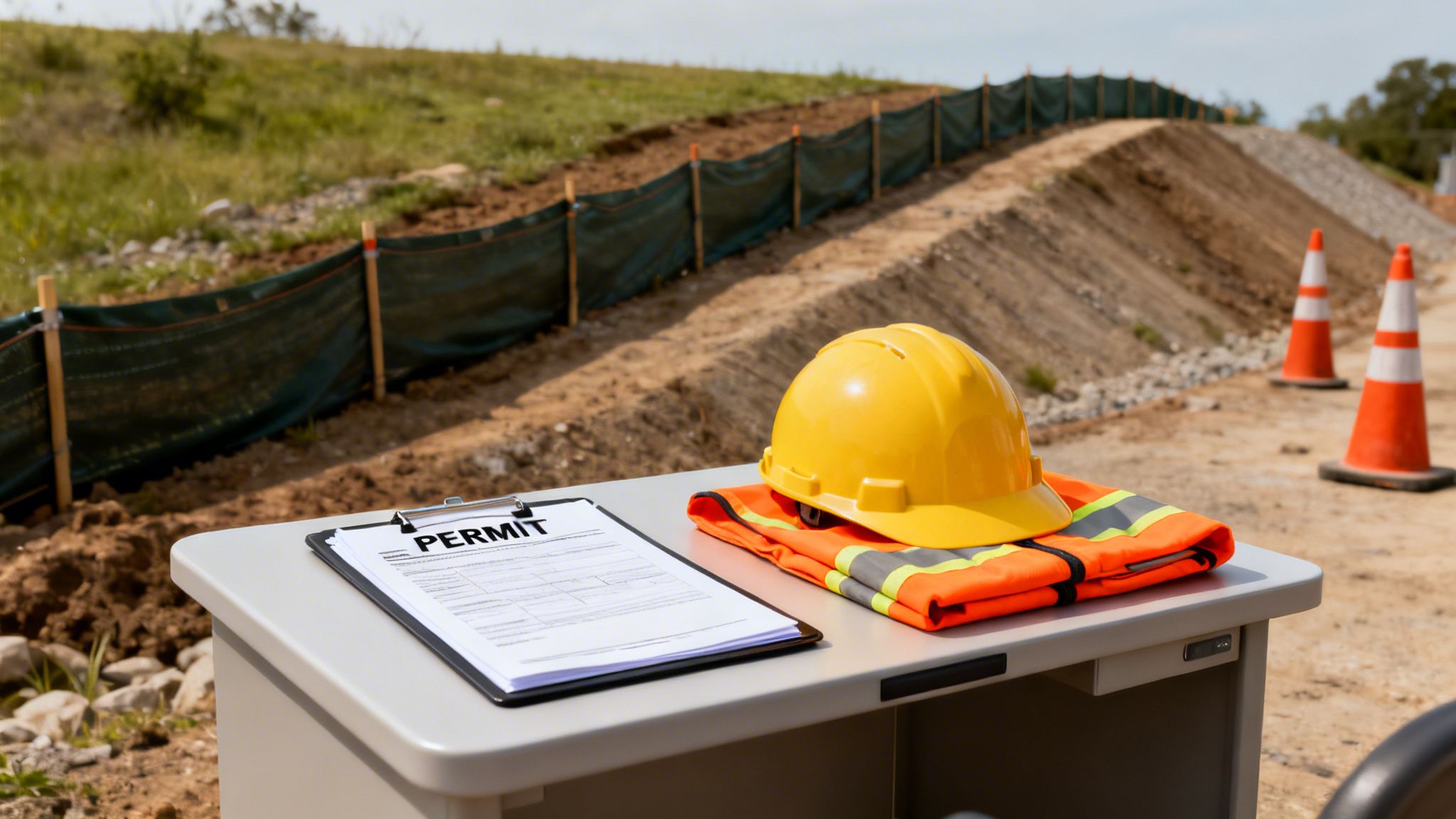
Sure, the rumble of heavy machinery gets all the attention, but the most important part of any site clearing job happens quietly, behind the scenes. This is the world of permits, environmental regulations, and safety standards—an invisible framework that keeps projects on track and everyone safe.
Trying to skip this step isn't just a bad idea; it's a surefire way to derail your entire project before the first tree even comes down. Think of it like this: a building needs a solid foundation, but that foundation needs approved blueprints before you can pour the concrete. Permits and regulations are the blueprints for the land itself.
A true professional doesn't just clear land; they navigate this maze for you, making sure everything done on your property is legal, responsible, and safe from start to finish.
The Paperwork Trail: Permits and Local Rules
Before a single shovel hits the ground, we have to deal with the paperwork. In North Carolina, these permits are non-negotiable. They’re there to protect your investment, your neighbors, and the local environment. Get this wrong, and you’re looking at stop-work orders and some pretty hefty fines.
A professional contractor will handle all of this, but it’s good to know what’s involved:
- Land Disturbance Permits: Anytime you’re moving a significant amount of soil, you’ll need one of these. It's basically an agreement that you have a plan to manage erosion.
- Erosion and Sediment Control Plans: This is the detailed game plan. It shows exactly how the site will be managed to keep soil from washing into storm drains and local streams during the work.
- Demolition Permits: Got an old shed or a crumbling foundation on the property? You’ll need a separate permit to make sure it’s taken down safely and the debris is handled correctly.
This oversight is a big reason the industry has grown so much. In the US, the demolition and wrecking sector, a huge part of site clearing, is projected to be an $11.2 billion industry by 2025. That growth is being shaped by environmental rules that demand responsible practices, and for good reason.
Being a Good Steward of the Land
Doing this job right is about more than just following the rules; it’s about actively protecting the land while we work on it. Good contractors use proven methods to keep the environmental impact as low as possible. It’s a commitment that protects your property value and the community around you.
A professional site clearing service doesn't just get the land ready for what's next. It acts as a temporary guardian of the local ecosystem, ensuring the work doesn't cause lasting harm.
So, what does that look like on the ground? You’ll see things like silt fences installed around the perimeter of the work area. These act like filters, catching sediment from rainwater before it can pollute nearby creeks. It also means a real commitment to recycling. Wood and green waste get chipped into mulch, while concrete and metal are sorted and sent off to be reused, keeping tons of material out of the landfill.
Safety: The One Thing We Never Compromise On
Above all else, a professional job site is a safe one. With heavy machinery, uneven ground, and all kinds of potential hazards, safety has to be the number one priority. Period. A qualified contractor runs a tight ship, with strict protocols to protect workers, visitors, and your property. This is exactly why you hire a licensed and insured company like FHP Contracting—it takes the risk off your shoulders.
Here’s what that protocol looks like in action:
- Hazard Identification: Before we start, we do a full walkthrough to spot potential risks. Are there buried utility lines? Unstable ground? Overhead power lines? We find them first.
- Site Security: The work area is clearly marked off and secured. This keeps the public out and prevents accidents, protecting both people and you from liability.
- Personal Protective Equipment (PPE): Every single person on our crew wears the right gear—hard hats, high-visibility vests, steel-toed boots, the works. No exceptions.
These steps aren't just a checklist; they’re part of a comprehensive quality control system. To see how this mindset applies to the whole building process, check out our guide on how a detailed construction quality control checklist ensures your project meets the highest standards from day one.
How to Choose the Right Site Clearing Contractor for Your Project
Picking a partner for your site clearing services is easily one of the most critical decisions you'll make for the entire construction project. The right crew sets the whole thing up for success. The wrong one? Well, that's a fast track to expensive delays, safety nightmares, and work that just isn't up to par. It’s about so much more than grabbing the lowest bid—you've got to look at their qualifications, their actual hands-on experience, and how upfront they are with you.
Think of it like hiring a surgeon. You wouldn't just go with the cheapest option, right? You'd want to see their credentials, their track record, and what other patients have said. It’s the same idea here. Your land is the patient, and you need a seasoned pro to get it prepped for the main operation: construction. A great team doesn’t just show up with heavy equipment; they bring crucial know-how about safety and all the local rules.
Verifying Credentials and Experience
Before you go any further, the first thing you have to do is make sure any contractor you're considering is legit and qualified. This isn't just a suggestion; it's a non-negotiable step that protects you from liability and proves they meet professional standards. Don't ever feel shy about asking for proof.
Here's what you need to check off your list:
- Licensing and Insurance: Every single contractor you talk to must have a valid general contractor's license for your state. They also need to carry both general liability and workers' compensation insurance. Ask to see the certificates.
- Safety Record: Straight up ask them about their safety history. A company that takes this seriously will have a documented safety program and a low incident rate. It shows they’re committed to protecting their crew and your property.
- Relevant Experience: Look for a portfolio of jobs that are similar to yours in both size and scope. A contractor who mainly clears small residential lots probably isn't the right fit for a massive commercial tract.
Evaluating Quotes and Local Expertise
A quote is so much more than just a number on a piece of paper. It’s the roadmap for your entire project. When you get a detailed, itemized quote that clearly spells out every single thing they're going to do, that’s a sign you’re dealing with a professional. Be wary of those vague, lump-sum bids that could be hiding future costs for things like hauling away debris or handling permit fees.
A great contractor doesn't just clear land; they provide clarity. Their quote should answer more questions than it creates, giving you a transparent view of the entire process from start to finish.
This is also where local knowledge is worth its weight in gold. A contractor like FHP Contracting, who really understands Southern North Carolina’s unique soil, drainage quirks, and permitting hoops, has an edge that an outsider just can't compete with. That local expertise helps them spot problems before they even happen, saving you from some major headaches down the road. For more on this, check out our detailed guide on how to choose a general contractor for a broader look at the process.
The site clearing industry is part of a massive market. To give you some perspective, the broader U.S. landscaping industry, which often overlaps with what we do, was estimated to be a $184.1 billion market in 2025 and employs nearly 1.5 million people. With that many companies out there, taking the time to verify credentials and local expertise is how you filter out the noise and find the real pros. You can learn more about the growth of the landscaping industry to get a sense of just how big this important sector is.
Got Questions? We've Got Answers.
Even after you've read up on the whole process, it's totally normal to have a few more specific questions pop up. You're not the first! This last section is dedicated to tackling the most common things we get asked about site clearing services. We want to give you straight, clear answers so you can feel confident moving forward.
Can I Just Clear The Land Myself To Save Some Cash?
Look, we get it. Tackling a weekend yard project is one thing, but getting a piece of land ready for construction is a whole different beast. This isn't a DIY-friendly task. We're talking about heavy machinery that’s not only expensive to rent but flat-out dangerous to operate without a ton of training.
Beyond just running the equipment, you have to deal with a whole maze of local permits, safety rules, and environmental laws. One little slip-up could mean expensive property damage, a serious injury, or hefty fines from regulators. Hiring a licensed pro ensures the job gets done safely, legally, and on schedule, saving you from costly mistakes that would wipe out any money you thought you were saving.
What Happens To All The Trees, Dirt, And Junk You Haul Away?
A true professional doesn't just make a mess and leave. We’re big on responsible and sustainable disposal. Everything that comes off your property gets carefully sorted.
For example, trees and brush often get a second life as mulch for landscaping. Concrete and asphalt can be crushed down and used as a base for new roads or other projects. Any metal we find heads to the scrap yard for recycling. This whole approach keeps as much as possible out of the landfill and lines up perfectly with North Carolina’s environmental rules, making sure your project starts on the right foot.
The sign of a truly professional site clearing service is their commitment to leaving a clean site and a clean conscience. Responsible disposal isn't an add-on; it's a core part of the job.
How Do You Keep From Wrecking The Neighbor's Yard (Or Things I Want To Keep)?
Protecting the surrounding property and any existing features you want to save is priority number one. We use a few different strategies to make sure all the work stays exactly where it's supposed to. It all starts with clearly marking every work boundary and property line so there's no confusion.
From there, we put up protective barriers like silt fences to keep soil from running off onto neighboring land or into local waterways. Our operators are absolute pros at maneuvering heavy equipment with surgical precision, carefully working around fences, sheds, and underground utility lines. A detailed plan and constant supervision on-site make sure the whole operation stays within its footprint.
If you have more questions about how we work, you can find a bunch more answers over on the FHP Contracting FAQ page.
Does Site Clearing Also Get The Ground Ready For The Foundation?
You bet it does. A complete site clearing job doesn't stop once the last tree is hauled away. The final, crucial step is prepping the ground for the next phase of construction.
After the land is cleared, we grade it precisely to create the right slope for water to drain away from your future home or building. Then, we bring in heavy rollers to compact the soil, creating a solid, stable base called a building pad. This last part is absolutely essential for making sure the ground can support your foundation and prevent settling issues down the road.
Ready to get your property from overgrown to construction-ready? The team at FHP Contracting has the experience, the equipment, and the local know-how to get your site clearing project done right. Start your project on solid ground by visiting us at https://fhpcontracting.com to schedule your free consultation today.