

Let's be honest, picking the right general contractor in Fayetteville, NC is probably the biggest decision you'll make for your entire project. It's the one choice that single-handedly shapes the quality, budget, and schedule of your build. Finding a local builder who is qualified, properly insured, and genuinely reputable is where a successful project truly begins.
Starting Your Fayetteville Construction Project Right
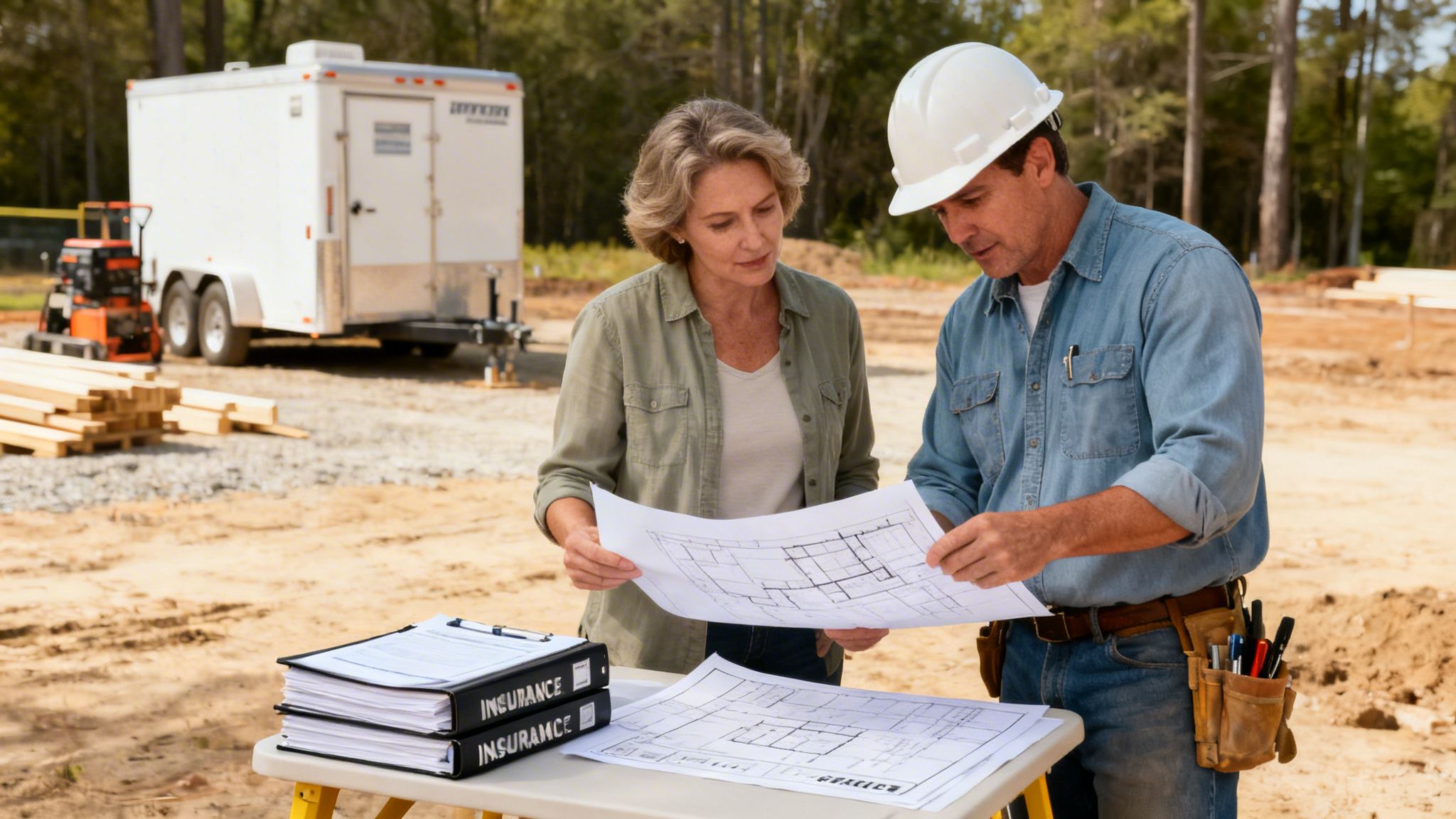
The success of that dream remodel or brand-new build really comes down to the partner you choose. This goes so much deeper than just finding the lowest bid. It’s about trusting your vision—and your hard-earned money—to a team that has proven integrity and real, boots-on-the-ground local knowledge.
The real work starts long before the first shovel ever hits the dirt. It begins with learning how to see past a glossy portfolio and start asking the questions that truly matter. You're not just looking for someone who can build something beautiful; you need a contractor who gets the unique quirks and requirements of building right here in our area.
Verifying Credentials and Local Roots
Before you even start talking about floor plans or finishes, you've got to cover the fundamentals. The first step is to confirm that any potential general contractor Fayetteville NC you're considering is legitimate and has a real stake in our community.
Here's what you need to look into from the very beginning:
- North Carolina Licensing: This is a big one. Is the contractor fully licensed for the specific work you need done? It's a non-negotiable legal requirement that’s there to protect you.
- Comprehensive Insurance: Do they carry both general liability and workers' compensation insurance? Don't just take their word for it—ask to see the certificates. This is what shields you from massive financial risk if an accident happens on your property.
- Local Experience: How long have they been working in Fayetteville and Cumberland County? A contractor with deep local roots will have a much better handle on building codes, the permitting process, and even things like soil conditions that can impact a project.
A contractor’s license and insurance aren't just pieces of paper; they're your first line of defense against shoddy work and personal liability. Taking the time to verify these up front is the single most important thing you can do to protect your investment.
Preparing for a Successful Project
A great project isn't just about hiring the right team; it also requires a little prep work on your part. Before you start making calls, take some time to really nail down your project's scope, what you hope to achieve, and what a "win" looks like for you. Even a simple outline makes that first conversation so much more productive.
For many projects, the first physical step is actually preparing the land itself. This is a critical stage you can learn more about by reading our guide on site clearing services.
Ultimately, you’re looking for a partner, like FHP Contracting, who approaches every project with integrity and skill from day one. This initial homework ensures your project is set on the right foundation long before construction ever starts.
How to Find and Vet Top Contractors in Fayetteville
Finding the right general contractor in Fayetteville, NC, isn't about a quick Google search. A truly successful project starts with a well-researched shortlist of qualified pros. You're looking for verifiable credentials, the right kind of experience, and a proven track record right here in our community.
First things first, tap into the local professional networks. I always point people toward groups like the Fayetteville Area Home Builders Association. Membership is a good sign that a contractor is serious about their craft, committed to industry standards, and invested in the local building scene.
From there, you need to do your own homework with the state. The North Carolina Licensing Board for General Contractors has a public database where you can check if a contractor's license is active and in good standing. Even better, you can see if they have any disciplinary actions or complaints on their record. It's a non-negotiable step.
Look for Relevant Project Experience
Once you've got a list of licensed builders, it's time to play detective with their portfolios. Don't just get dazzled by pretty photos. Look for projects that actually mirror the scale and complexity of what you want to do. If you're planning a major commercial upfit, a portfolio packed with residential bathroom remodels just isn't the right fit.
Get specific when you're looking at their past work:
- Project Size: Have they handled jobs with a similar square footage or budget to yours?
- Project Type: Is their gallery full of custom homes, commercial builds, or the kind of remodels you have in mind?
- Style and Quality: Zoom in on the details. Look at the finish work, the materials they chose, and the overall craftsmanship. Does it match the quality you expect?
For example, a company like FHP Contracting has a really diverse portfolio—everything from big commercial developments to stunning custom homes. Seeing that kind of range gives you the confidence they can tackle your specific project, whatever it may be.
How to Interpret Client Reviews
Client reviews are pure gold, but you have to learn to read between the lines. A simple five-star rating doesn't tell you much. The real story is in the details.
The most telling reviews aren't the glowing ones. They're the ones that describe how a contractor handled a curveball. Construction is rarely perfect, and a contractor’s ability to communicate clearly and solve problems professionally is what separates the good from the great.
When you're sifting through testimonials, keep an eye out for comments about:
- Communication: Were updates regular and clear? Was it easy to get ahold of the project manager?
- Timeline and Budget: Did they stick to the schedule and budget? How did they handle changes or overages?
- Problem-Solving: When things went wrong—and they sometimes do—how did the team respond? Were they proactive and fair?
This deep-dive vetting process is what turns a long list of names into a solid shortlist of true professionals. If you want more tips on making this huge decision, check out our detailed article on how to choose the right general contractor. Taking the time to build this foundational list is the single most important thing you can do for your project's success.
Alright, you’ve done the research and narrowed down your list of potential contractors. Now comes the most important part: the conversation. This is where you separate the real pros from the rest of the pack. Think of it less like an interview and more like a crucial gut-check to make sure their way of doing things aligns with your vision and expectations.
Getting past the basic "how much?" and "how long?" questions is what will save you from major headaches down the road. You’re looking for a general contractor in Fayetteville NC who is confident, transparent, and has a solid process. If their answers are vague or they seem annoyed by your questions, that’s a huge red flag. A seasoned pro will welcome the chance to show you they know their stuff.
First Things First: Licenses and Insurance
Never, ever just take a contractor's word that they have their credentials in order. This is the absolute baseline for protecting yourself legally and financially. Don't just ask if they're licensed and insured—ask for the proof and check it yourself.
- "Can you give me your North Carolina General Contractor license number?" Once you have it, pop over to the NC Licensing Board for General Contractors' website. You can see if their license is active, what kind of projects they’re legally allowed to take on, and if they have any disciplinary actions against them. It takes two minutes.
- "Could I get a copy of your certificate of insurance for general liability and workers' compensation?" This is a deal-breaker. General liability is what covers your property if something goes wrong, and workers' comp protects you from liability if a crew member gets hurt on your job site. Make sure the policy numbers and coverage limits are sufficient for the scale of your project.
A professional contractor will have these documents ready to go. If they hesitate, make excuses, or act like you’re being difficult for asking, walk away. Seriously. Your financial security is on the line.
The whole process can feel overwhelming, but it boils down to a few key actions.
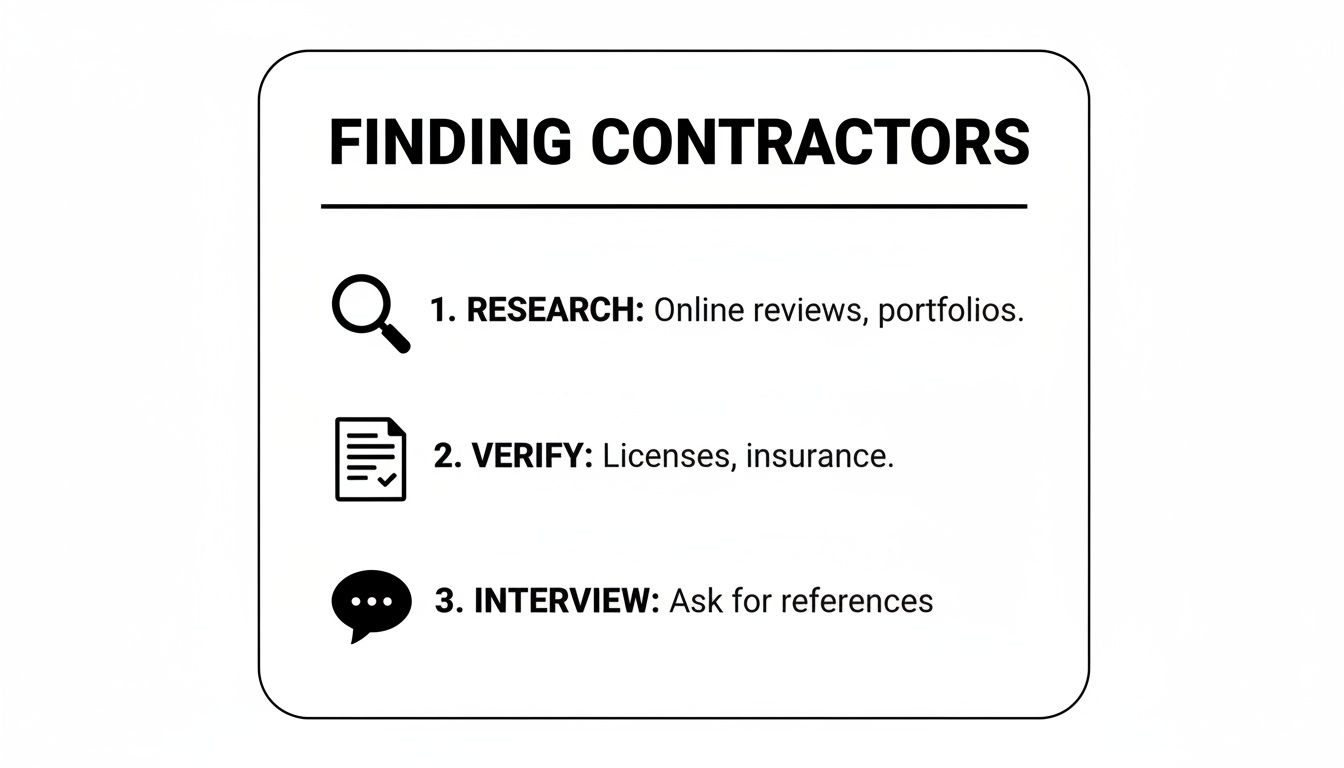
As you can see, it's a simple formula: do your homework, verify the essentials, and then have a detailed conversation. This is the tried-and-true path to finding a partner you can trust.
How They Manage the Job (And You)
The way a contractor handles the day-to-day of a project says everything about what your experience will be like. Their systems (or lack thereof) have a direct impact on your budget, your timeline, and your sanity.
Here’s a table of essential questions to ask. I've used this checklist myself, and it's a fantastic way to make sure you cover all the bases during your conversations.
Contractor Interview Checklist: Key Questions
Use this checklist to ensure you cover all critical topics during your contractor interviews.
| Question Category | Specific Question to Ask | What to Look for in the Answer |
|---|---|---|
| Experience & Fit | "Have you completed projects similar to mine in size and scope? Can I see photos or talk to references?" | A portfolio of relevant work and enthusiastic references. They should be proud to show you what they've done. |
| Communication | "How will you keep me updated on progress, delays, and budget changes? Who is my main point of contact?" | A clear, proactive communication plan (e.g., weekly emails, a client portal, regular site meetings). You shouldn't have to chase them for information. |
| Subcontractors | "How do you choose your subcontractors? Are they all licensed and insured?" | A process that prioritizes quality, reliability, and proper credentials over just finding the cheapest labor. They should vet their team as carefully as you are vetting them. |
| Change Orders | "What's the process if I want to make a change or if an unexpected issue comes up?" | A formal, written change order process. Any change should be documented with new costs and timeline impacts and require your signature before work proceeds. |
| Warranty | "What kind of workmanship warranty do you offer, and what does it cover?" | A clear, written warranty. A one-year workmanship warranty is the industry standard for a quality builder like FHP Contracting. |
Having this list handy prevents you from forgetting something critical in the moment. A contractor's answers—or their inability to answer—will tell you everything you need to know about their professionalism and commitment to a smooth client experience.
At FHP Contracting, for example, we use modern project management tools and have set communication protocols so our clients are always in the loop, never wondering what's happening on their own project.
We know these aren't the only questions you'll have. We've compiled a bunch more on our frequently asked questions page to help you out.
Asking these tough, detailed questions upfront is the single best thing you can do to ensure you're hiring more than just a builder—you're hiring a professional partner for your project.
Getting Down to Brass Tacks: Contracts, Budgets, and Timelines
Alright, you've sifted through the options and found a contractor who seems to get your vision. That's a huge step. But now comes the part that really protects your investment: moving from a conversation to a contract. A handshake is a great start, but a detailed, written contract is the only thing that truly matters. Frankly, any professional general contractor in Fayetteville NC worth their salt will insist on one.
Think of the contract as the official playbook for your project. It turns all those talks and estimates into solid, agreed-upon deliverables, deadlines, and payment terms. It's the one document everyone can turn to, which prevents so many headaches and costly arguments later on. If a contractor hands you something vague or pressures you to sign before you're 100% comfortable, walk away.
What a Real Contract Looks Like
A solid construction contract isn't just a price tag with a signature line at the bottom. It’s a detailed roadmap. I've seen my share of them, and the good ones leave absolutely no room for guessing games.
Here's what you should always find in a legitimate contract:
- A Detailed Scope of Work: This needs to spell out exactly what's being done. It should be so clear that if your contractor disappeared, another one could step in and know precisely what to do next. It should cover everything from demolition to the final paint touch-ups and, just as crucially, what’s not included.
- Specific Materials & Products: The contract has to list the brands, model numbers, and quality of major items. I'm talking windows, flooring, faucets, you name it. Vague phrases like "builder-grade fixtures" are a major red flag that you might not get the quality you’re paying for.
- A Clear Payment Schedule: Payments should be tied to visible progress. For example, a payment is due after the foundation is poured, another after framing is complete, and so on. Be wary of anyone asking for a massive upfront payment. A typical deposit in North Carolina is around 10-20%, and that's it until the first milestone is hit.
- How Changes and Problems are Handled: Let's be real, projects sometimes change. A good contract has a "change order" process built right in. This means any adjustments to the plan, price, or schedule have to be put in writing and signed off by both of you before any new work happens.
A contract isn’t about mistrust; it’s about clarity. It protects both you and the contractor by creating a shared understanding of expectations, responsibilities, and outcomes before the first nail is hammered.
Budgeting for Reality, Not Just the Bid
When you're looking at bids, it's easy to get drawn to the lowest number. But in my experience, the cheapest bid is often a warning. It can signal cut corners, subpar materials, or a plan to hit you with a ton of expensive "surprises" and change orders down the road.
A transparent, honest bid will break everything down: labor, materials, permits, everything. You should be able to see where every dollar is going. Beyond that, you absolutely have to plan for the unknown. Set aside a contingency fund of 10-20% of your total project cost. This is your safety net for when a plumber opens a wall and finds old, corroded pipes or you decide you absolutely must have those different countertops. A good contractor will tell you to plan for this.
Finally, a realistic timeline is just as important as the budget. An experienced local contractor knows the ins and outs of Fayetteville's permitting office, the lead times for custom windows, and how to schedule subcontractors so they aren't tripping over each other. Ask them how they build their schedules. Ask what happens if there's a delay. For a much deeper look at how we ensure things run smoothly, you can grab a copy of our construction quality control checklist.
The Advantage of Hiring a Local Fayetteville Contractor
When you're ready to build or remodel, it’s easy to assume any qualified contractor can get the job done. But trust me, there’s a world of difference between a good contractor and a good local contractor. Choosing a general contractor in Fayetteville NC with deep roots in the community gives you an edge that an out-of-town firm just can't offer.
It’s about more than convenience. It's about having someone who lives and breathes this area—who understands the unique landscape of building in Cumberland County and can save you a mountain of time, money, and stress.
They know which neighborhoods have that sandy soil that demands special foundation work. They’ve seen how our regional weather patterns can throw a wrench in project timelines and already have a plan B. This kind of firsthand knowledge is what stops small issues from turning into costly disasters.
Understanding Local Codes and Regulations
Every county has its own quirks and rules, and Fayetteville is certainly no exception. A true local contractor has spent years building a working relationship with the Cumberland County Planning and Inspections department. They don’t just know the rules; they know the people and the process.
This is huge. It means your permits get submitted correctly the first time, sailing through approvals instead of getting tangled in bureaucratic red tape for weeks. They’re already thinking about the specific code requirements for everything from hurricane-rated windows to the unique zoning laws around Fort Liberty, making sure your project is compliant from day one.
Think of it this way: a local contractor has passed inspections here hundreds of times. They know what the inspectors are looking for because they've shaken their hands and walked through job sites with them. That's a level of insight you just can't get from a company based two counties over.
A Network of Proven Local Talent
Beyond navigating the city offices, the best local contractors bring an entire team with them. They've spent years figuring out which subcontractors are the real deal—the electricians who show up on time, the plumbers whose work never leaks, and the carpenters who are true craftsmen. This isn't a list they found online; it's a trusted network built on years of successful projects.
This extends to suppliers, too. A Fayetteville-based builder knows which local lumber yard has the best materials and can get them delivered to your site this afternoon, not sometime next week. This prevents those frustrating delays where your whole project grinds to a halt waiting for a truck from out of state.
Here's what that really means for you:
- Faster Response Times: When an unexpected issue pops up (and they always do), your contractor is a short drive away, not hours. Problems get solved immediately.
- Reputation on the Line: Local firms like FHP Contracting live and die by their community reputation. They're your neighbors. They shop at the same stores. Their accountability is directly to you and the community they call home.
- Keeping It Local: When you hire a local company, your investment stays right here in the Fayetteville economy, supporting local jobs and families.
At the end of the day, hiring a local general contractor isn’t just about hiring a builder. You're gaining a partner who has invaluable insider knowledge and a personal stake in seeing your project succeed.
Common Questions About Hiring a General Contractor
Stepping into a big remodel or new construction project can feel like learning a new language. Suddenly, you’re dealing with bids, change orders, and down payments, and it’s easy to feel a little lost. As you start looking for the right general contractor in Fayetteville NC, getting clear on these common questions is one of the best things you can do.
Honestly, even the simplest questions can tell you a ton about a contractor’s transparency and how they run their business. Knowing what to ask—and what the answers should sound like—helps you spot potential red flags before they turn into major headaches.
What Is the Difference Between a Bid and an Estimate?
This is a big one, and getting it wrong can wreck your budget. Think of an estimate as a ballpark figure. It’s a contractor’s first educated guess at what your project might cost, usually based on an initial conversation and a general idea of your goals. It’s helpful for early planning, but it is not a fixed price.
A bid (or a formal proposal) is where the rubber meets the road. This is a detailed, firm offer you get after the contractor has dug into your specific plans, your material choices, and the unique quirks of your property. A solid bid should break everything down—labor, materials, permits, the works—giving you a fixed price you can actually plan around. You should always insist on a detailed, itemized bid before signing on the dotted line.
How Much Should I Expect to Pay as a Down Payment?
Here in North Carolina, the standard is usually somewhere between 10% and 20% of the total project cost. This initial payment isn't just pocketed; it’s what allows your contractor to lock in materials at current prices and get subcontractors on the schedule.
A contractor asking for a massive down payment—like 50% or more—is one of the biggest red flags in this business. Run, don't walk. A trustworthy contractor will structure payments around project milestones. You pay for the foundation once it's poured, you pay for framing once it's up, and so on. This keeps everyone accountable.
What Happens if There Is an Unexpected Issue or Change?
Let’s be real: even the most perfectly planned projects can have surprises. Maybe you decide you want different countertops halfway through, or we open a wall and find unexpected plumbing issues. A pro handles this with a document called a "change order."
This isn't just a verbal agreement. It’s a formal, written document that spells out exactly what’s changing, how it affects the cost (whether it's an add or a credit), and if it will adjust the timeline. Most importantly, both you and your contractor have to sign off on the change order before the new work starts. This simple step prevents any nasty surprises on the final bill and keeps everything transparent.
Ready to build your vision with a team that values clarity and accountability? Contact FHP Contracting for a free consultation and see how our experienced team can bring your project to life. Learn more at https://fhpcontracting.com.