
A successful build isn't just about blueprints and materials; it’s anchored by a realistic and dynamic construction project timeline. Think of it as the master plan that wrangles every subcontractor, supply delivery, and inspection, turning a vision into a tangible asset.
Why a Timeline Is Your Most Valuable Blueprint
A well-managed timeline is what separates a successful project from costly, soul-crushing chaos. For anyone embarking on a build, whether it's a custom barndominium or a commercial upfit, this schedule is what manages expectations, stops budget overruns in their tracks, and gives everyone a clear roadmap from groundbreaking to final walkthrough.
Without one, you're basically navigating one of life's most complex processes completely blindfolded. And this isn’t just about avoiding frustration; it’s about managing some serious financial risk. In an industry where delays are the norm, not the exception, a proactive scheduling strategy is your single best defense.
The High Cost of Poor Planning
Let's be real: most large-scale projects hit significant setbacks. Globally, a staggering 70-80% of major projects overrun their original schedules by an average of 20-30%. This is often due to things completely out of your control, like supply chain meltdowns and regulatory hurdles. That stat alone, which you can read more about in this report from Currie & Brown, shows why you can't just "wing it."
A detailed construction project timeline isn't a suggestion—it's an essential management tool. It's what allows a good project manager to:
- Anticipate Bottlenecks: You can see task dependencies from a mile away. This is how you avoid having the drywall crew show up, ready to work, only to find out they have to wait two weeks because the plumbing inspection got delayed.
- Allocate Resources Efficiently: It ensures materials, equipment, and your crews are on-site exactly when they’re needed—not a day early (where they're in the way) or a day late (where they're holding everything up).
- Maintain Financial Control: A project that stays on schedule is far more likely to stay on budget. Delays have a nasty ripple effect that always ends up costing money.
- Enhance Stakeholder Communication: It provides clients, investors, and subs with a single, transparent source of truth for project progress. No more conflicting stories or missed updates.
In the end, a timeline does way more than just track dates. It builds confidence, creates accountability, and carves out a predictable path to getting the job done right. It transforms abstract plans into a concrete, day-by-day strategy. At FHP Contracting, we build every single project on this solid foundation.
Mapping Out the Major Project Phases
A bulletproof construction project timeline doesn’t just happen—it’s meticulously built by breaking a massive undertaking into distinct, manageable phases. This isn't just about making a long list of tasks; it’s about creating a high-level roadmap that shows what happens and when, turning a complex build into a sequence of achievable goals.
Each phase comes with its own set of critical tasks and milestones. Getting a handle on these stages is the first real step toward creating a schedule that holds up in the real world. From the first napkin sketch to the final handover, every build follows a logical flow that everyone involved needs to understand.
Without this structure, trying to coordinate the countless moving parts of a construction project is a recipe for disaster. This is how a clear plan can quickly spiral into chaos, delays, and painful cost overruns.
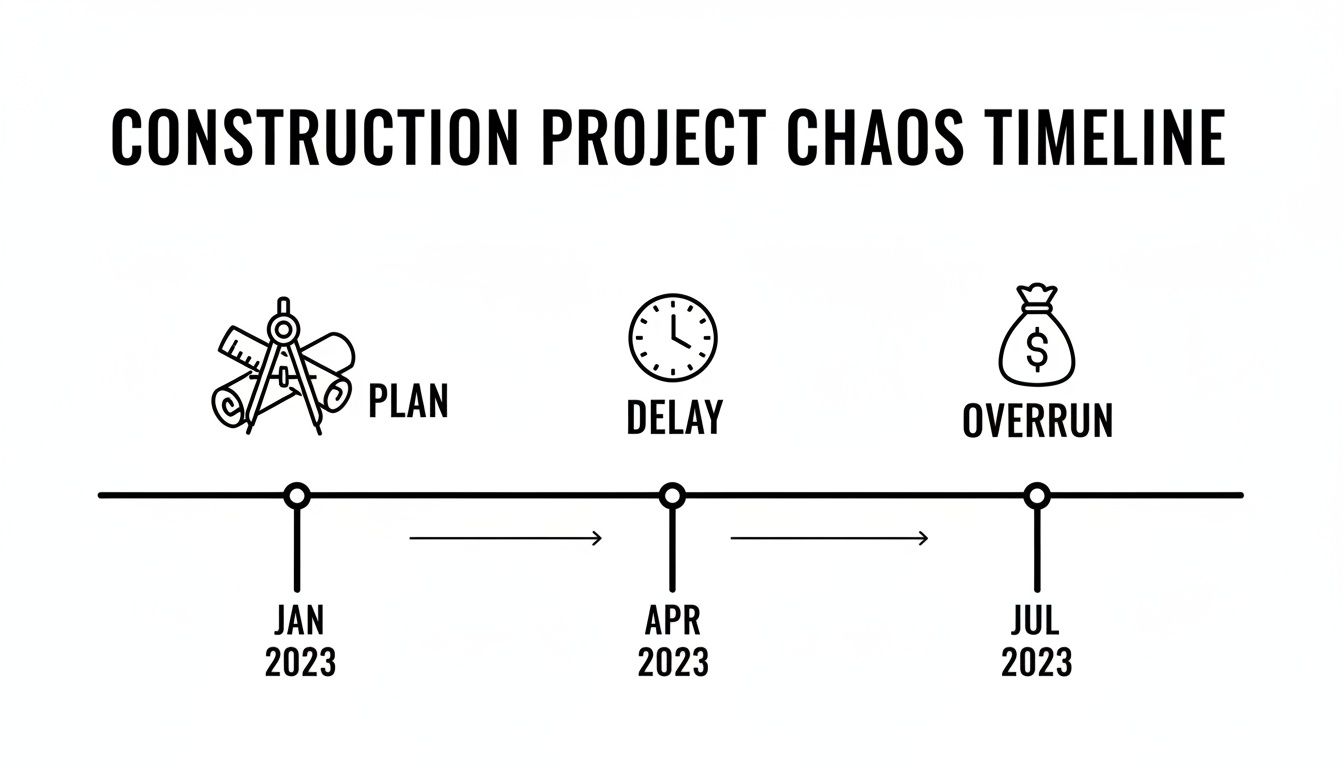
You can see the domino effect plain as day. One unexpected hiccup triggers a cascade of problems, which is exactly why a phased approach is non-negotiable.
The Pre-Construction Phase
This is where projects are won or lost before a single shovel ever hits the dirt. You could argue it's the most critical stage of all, packed with intensive planning, design work, and a whole lot of due diligence. We're talking site analysis, architectural design, engineering, and the big one: securing permits.
That last part can be a surprisingly lengthy ordeal. For example, navigating the permitting process for a government contract here in North Carolina involves layers of compliance and public-sector reviews that a standard residential build just doesn't have. We’ve seen simple zoning approvals take weeks, while complex commercial permits can easily stretch on for months. Getting this phase right is what prevents costly rework down the line.
The Procurement Phase
Once the design is locked in and the permits are in motion, the focus shifts to getting everything and everyone you need. This is the procurement phase. It involves sending out bids to trusted subcontractors, hammering out contracts, and, crucially, ordering materials and equipment. This phase is completely at the mercy of market conditions and supply chain realities.
A common mistake we see is underestimating lead times. Custom windows, specialized steel trusses, or high-end HVAC systems can have lead times of 16 weeks or more. You absolutely have to factor these into the timeline from day one, or you risk the entire site grinding to a halt.
The Construction Phase
Now for the part everyone sees—the phase where the physical structure starts taking shape. It all kicks off with site preparation, which often requires professional site clearing services to get the land ready for what’s to come. From there, the build moves through a sequence of tasks that depend on each other:
- Foundation: This is where it all starts, pouring concrete footings and slabs.
- Framing: Next, the structural skeleton of the building goes up.
- MEP Rough-Ins: With the frame in place, it's time to install the Mechanical, Electrical, and Plumbing systems inside the walls.
- Exterior & Interior Finishes: Finally, you're closing it in with roofing, siding, insulation, drywall, and all the interior details.
Each one of these steps has to be completed and often inspected before the next crew can even start their work. It’s a highly coordinated dance.
The Post-Construction Phase
The final leg of the journey is about more than just cleaning up the site. This phase includes the final inspections from city or county officials, which can sometimes turn up a few items that need to be corrected. Once we get the official Certificate of Occupancy, we create a punch list—a detailed list of all the minor fixes and adjustments needed before we hand over the keys.
This phase wraps up with client training on new systems, the official handover, and the start of the warranty period. It’s this methodical, phase-by-phase approach that ensures every single detail gets addressed, bringing the project to a successful and satisfying close.
The duration of these phases can vary wildly depending on the type of project. A custom home build has a very different rhythm than a quick commercial upfit.
Here’s a rough idea of what to expect for a couple of common project types.
Typical Project Phase Durations
| Project Phase | Custom Home (Approx. Duration) | Commercial Upfit (Approx. Duration) |
|---|---|---|
| Pre-Construction | 3–6 months | 1–3 months |
| Procurement | 1–2 months | 2–4 weeks |
| Construction | 9–14 months | 3–6 months |
| Post-Construction | 2–4 weeks | 1–2 weeks |
Keep in mind, these are just ballpark figures. A complex, high-end custom home could easily take longer, while a simple tenant improvement could be wrapped up much faster. The key is understanding how these phases interact and planning accordingly.
Once you’ve got the major project phases mapped out, the real work begins. This is where you start assigning realistic timelines to individual tasks and figuring out how they all fit together. This isn't just about plugging dates into a spreadsheet; it’s a skill that seasoned contractors develop over years in the field. You have to look beyond the blueprints and account for all the real-world variables that can speed up or slow down a job.
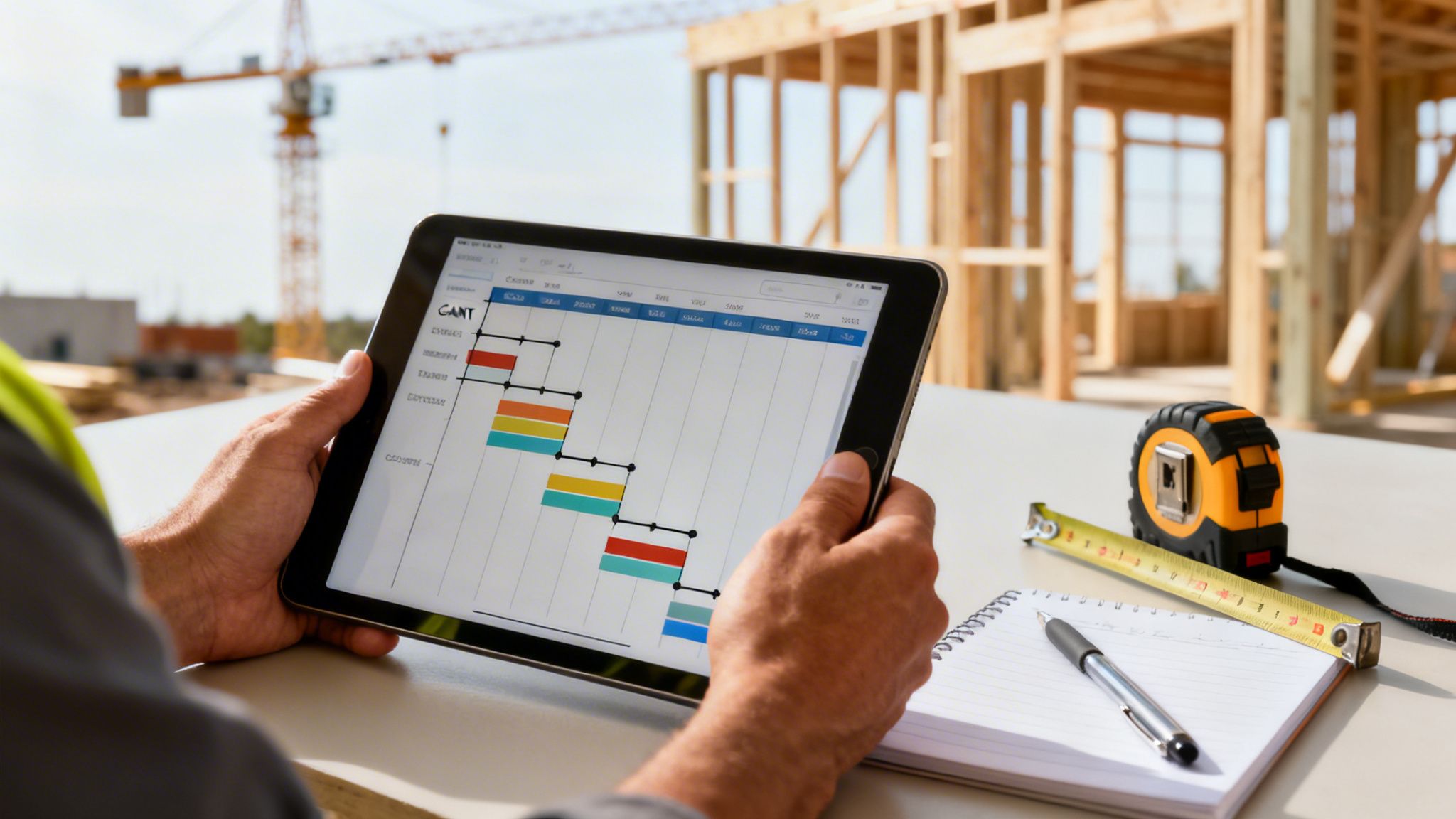
Here in North Carolina, that means thinking about crew size, the lead time on materials, and even the weather. A smaller framing crew is obviously going to take longer than a big one. And anyone who's worked here knows a rainy spring can turn a simple excavation into a week-long battle with mud, throwing off every trade that’s scheduled to come after.
Understanding Task Dependencies
No job on a construction site happens in a bubble. The whole project is like a complex chain reaction where one task has to finish before the next one can even start. It’s simple, really: you can’t hang drywall until the plumbing and electrical rough-ins have been inspected and signed off. This web of dependencies is the true backbone of your project timeline.
A great way to get your head around this is the Critical Path Method (CPM). It’s a technique that helps you identify the longest string of dependent tasks that directly dictates the project’s final completion date. If any task on this "critical path" gets delayed, the whole project gets delayed.
Think of it like a relay race. It doesn’t matter how fast your other runners are—if one person drops the baton, the whole team’s finish time suffers. Your critical path shows you exactly which tasks need the most attention to keep things moving.
Practical Tips for Realistic Estimates
Getting your estimates right is a mix of art and science. It’s about digging into your past project data while also keeping a close eye on what’s happening in the market right now. The trick is to break down big, overwhelming phases into smaller, more manageable tasks that you can actually put a number on.
Here are a few strategies we rely on to nail down our estimates:
- Talk to Your Subs. Your subcontractors live and breathe their trades every single day. Go ask your electrician how long it’ll take to wire a 3,000-square-foot commercial space. Their hands-on experience is worth more than any generic estimating guide you can find.
- Build in Buffers. This is a big one. You have to account for long-lead items. If you know custom cabinetry takes 12 weeks to be delivered, you better order it early and build that window right into the schedule. A little buffer for a key material can prevent a single delayed truck from derailing the entire job. It also helps to have a solid construction quality control checklist to catch small problems before they become big delays.
- Keep an Eye on the Big Picture. Projections show global construction costs could climb by 2.4% by 2026, but the real threats to a timeline are things like labor shortages and supply chain disruptions. These issues can stretch procurement out by weeks or even months. It’s this kind of uncertainty that’s making things like modular construction more popular—offsite prefabrication can shorten project timelines by a massive 20-50%. You can read more about these construction industry trends and how they might impact your schedule.
When you bring all these pieces together, you stop guessing and start planning strategically. Your timeline transforms from a simple list of dates into a powerful, reliable tool for managing what is often a huge investment of time and money.
Planning for Delays Before They Happen
Let's be honest: even the most perfectly crafted construction schedule is going to collide with reality at some point. The projects that really succeed aren't the ones that magically avoid every single problem—they're the ones that planned for them from the get-go. Getting ahead of the two biggest variables, regulatory hurdles and whatever surprises are hiding behind the walls, is what separates a smooth build from a chaotic one.
It all starts by admitting that some parts of the schedule are completely out of your hands. Here in North Carolina, the permitting and inspection process is the classic example. Those government timelines aren't gentle suggestions; they are hard stops in your schedule that have to be baked in from day one. If you don't account for a two-week plan review or a three-day wait for an electrical inspection, you're setting yourself up for a domino effect of delays.
Smart Contingency Planning
Building a buffer into your timeline isn't just about tacking on a few extra weeks for the heck of it. Real contingency planning is more strategic. It's about looking at your project, identifying the potential weak spots, and creating a realistic plan to absorb the hit when something goes wrong.
You need to be thinking about common risks like:
- Supply Chain Messes: What's the plan if those custom windows get stuck on a container ship for a month? Have you already talked to a backup supplier or figured out how other trades can work around that part of the build?
- Subcontractor Logjams: Your go-to plumber is a rockstar, but what happens when they get tied up on another job? Having backup relationships and keeping the lines of communication wide open is key.
- Hidden Site Conditions: This is a huge one for any project that involves digging or demo. You never truly know what’s lurking beneath the soil or behind that drywall.
We had a project where the initial soil tests looked perfectly fine. But once we started excavating, we hit a massive patch of soft, unsuitable soil that had to be completely removed and replaced. Because we had a contingency for unforeseen site conditions built right into the schedule, we were able to pivot fast. We got an engineer on-site, sourced the right backfill material, and adjusted the foundation timeline without throwing the whole project off the rails. That bit of foresight saved the client tens of thousands of dollars and weeks of delays.
Discovering an issue like unmanaged crawl space moisture during a renovation is another perfect example. It seems small, but it can become a major schedule-killer if you haven't planned for that kind of discovery.
The Global and Local Impact
These aren't just local headaches, either; they're symptoms of a bigger industry trend. In places like the UK, experts are predicting a 3.6% cost increase on top of potential project extensions of 6-12 months, all thanks to planning and procurement bottlenecks. That trend hits close to home for commercial and government projects right here in NC, where strict code compliance and insurance coordination add even more layers of potential delays.
You can read more about the global cost outlook to see just how these pressures are building. At the end of the day, a proactive, eyes-wide-open approach to delays is the absolute best way to protect your investment and keep your timeline from going off the rails.
Keeping Everyone on the Same Page with Communication and Tech
A construction project timeline is only worth the paper it's printed on if it's treated like a living, breathing document—not some relic gathering dust in a site trailer. To keep a project humming along, that schedule has to become the central nervous system for every single person on the job. This is where solid, consistent communication and the right tech turn a static plan into a dynamic command center.
If information isn't flowing freely, even the most meticulously planned schedule will fall apart. Regular progress meetings are absolutely non-negotiable. This is where we get clients, subcontractors, and suppliers in the same room (or on the same call) to get aligned, hash out challenges, and make adjustments in real time. Transparent updates keep everyone invested and accountable, nipping those small misunderstandings in the bud before they can snowball into major delays. Of course, this all hinges on having the right team in place from the start, which is why it's so important to know how to choose a general contractor who makes this level of communication a priority.
Putting Modern Construction Tools to Work
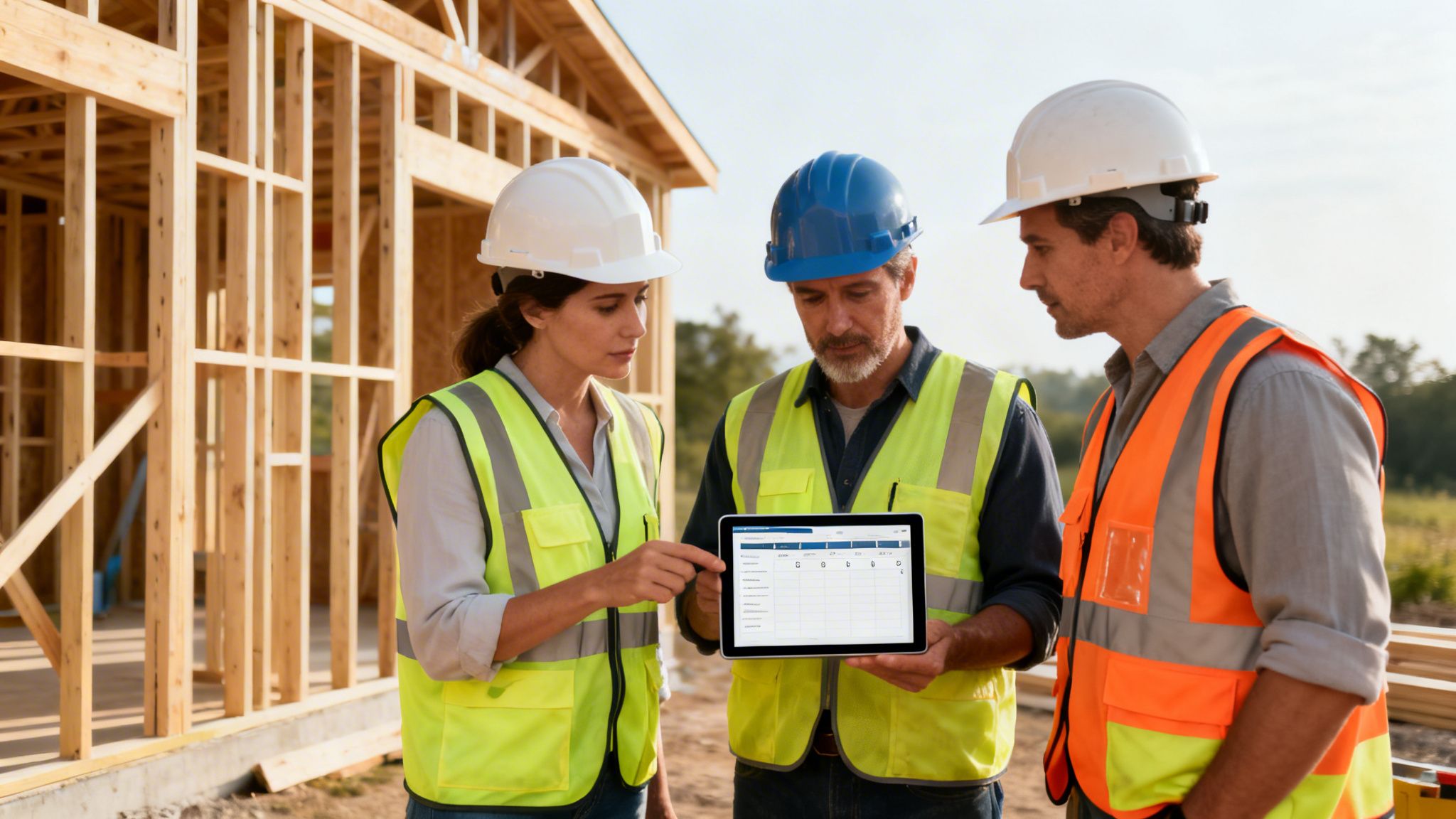
Today’s job sites don't just run on heavy machinery; they run on data. Project management software like Procore and Buildertrend have become indispensable for us, creating a single source of truth for the entire team. With these platforms, we can share updated schedules, daily logs, and critical documents instantly, so everyone from the field to the office is working off the same playbook.
One classic tool that’s still incredibly powerful is the Gantt chart. It’s the perfect way to visually map out task dependencies and track progress against our key milestones. It shows with crystal clarity how a delay in one area—say, pouring the foundation—is going to bump back the start date for framing, electrical, and everything that follows.
A timeline isn't just a schedule; it's a communication tool. When everyone from the client to the newest apprentice on site can see the plan and understand their role in it, you create a culture of shared ownership that is crucial for staying on track.
The Real-World Impact of New Tech
The industry is also getting a huge boost from more advanced technologies. Building Information Modeling (BIM) is a game-changer, letting us build a detailed 3D model of the project before a single shovel hits the ground. By using BIM—which is now part of 65% of projects worldwide—teams can spot clashes between plumbing and electrical systems virtually, cutting down on physical rework by up to 15%. With the BIM market expected to hit $5.42 billion globally in 2026, its power to slash rework by 10-20% is a massive win for schedule reliability.
On top of that, we're all feeling the pinch of an ongoing skilled labor shortage of over 349,000 workers, which has 92% of firms looking for new ways to innovate. Technologies like job site drones and worker wearables are stepping up to fill the gaps, boosting productivity by as much as 15-25%. According to a 2026 global construction outlook, these kinds of advancements are becoming essential for keeping a modern construction project on course.
Got Questions About Your Timeline? We've Got Answers.
After years of managing builds here in North Carolina, we've seen the same questions about construction timelines pop up again and again. It's totally understandable. The schedule is where the dream meets the dirt, and it's often the single biggest source of anxiety for clients.
Let's walk through some of the most common questions we hear, drawing from real-world experience on the job site. Getting a handle on these points from the get-go is the best way to keep things running smoothly.
What Is the Biggest Cause of Construction Delays?
Everyone loves to blame bad weather or supply chain holdups, and while those certainly play a part, the real culprit is almost always poor pre-construction planning. When designs are incomplete, the scope is vague, or big changes are made after we've already started, it kicks off a domino effect that's nearly impossible to stop.
This is exactly why we're so obsessive about locking down every single detail before a shovel ever hits the ground.
And it’s not just our opinion. Data from massive projects paints a pretty stark picture. A jaw-dropping 90% of major construction projects blow past their deadlines, with overruns averaging a staggering 80%. The root cause? Almost always poor scope definition and stakeholders not being on the same page from day one. As you can see in this detailed construction industry analysis, a rock-solid plan is your best defense against a schedule spiraling out of control.
How Do Change Orders Affect the Project Timeline?
A change order is going to hit both your schedule and your budget. Period. Even a request that sounds simple on the surface, like moving a wall that isn't holding anything up, sets off a surprisingly complex chain reaction behind the scenes.
Here’s a glimpse of what actually happens:
- New Drawings: The architectural plans have to be officially redrawn and re-approved.
- Rescheduling Trades: We have to get back on the phone with the framers, electricians, plumbers, and drywall guys to completely rework their schedules.
- Material Adjustments: We might need to order different materials, which can have their own frustrating lead times.
Our policy is full transparency. We always give you a clear, honest breakdown of exactly how much time and money any change will cost. This way, you can make a fully informed decision before we move forward, keeping everyone aligned and avoiding headaches down the road.
Can We Finish the Project Faster Than Scheduled?
Ah, the dream question! But the truth is, accelerating a construction schedule is rarely that simple. It's sometimes possible, but it usually involves major trade-offs. We're talking increased costs for overtime labor or, worse, rushing crucial steps that could compromise the quality of your home.
A professionally built timeline is already optimized to be as efficient as possible without cutting corners.
Honestly, the most reliable way to get to the finish line quickly is to stick to the original plan. Make your decisions on finishes—like paint colors, tile, and light fixtures—on time, and keep those change orders to a minimum. A project that finishes exactly when it was planned is a huge win. It’s a testament to great planning and teamwork, and it’s the goal we’re always aiming for.