
That musty smell you can't quite place, those chilly floors on a winter morning, and the energy bills that keep creeping up—they often point to one overlooked culprit: your crawl space. The biggest wins from encapsulating this space are breathing cleaner indoor air, enjoying real energy savings, and protecting your home's foundation for the long haul. It’s about transforming a part of your house that’s a liability into a huge asset for your home's health and efficiency.
What Happens in the Crawl Space Stays in the House
A lot of homeowners don’t realize that an old-school, vented crawl space is basically a gaping hole under their house. It’s an open invitation for moisture, pests, and all sorts of allergens to come right in. The thing is, the air in your house is all connected, and it follows a simple rule of physics called the "stack effect."
It works just like a chimney. Air gets pulled up from the lowest point of the house—your crawl space—and rises into your living room, kitchen, and bedrooms. So, if the air under your home is damp, musty, or full of mold spores, that’s exactly what you and your family are breathing upstairs.
Understanding the Stack Effect
Because of the stack effect, a huge chunk of the air you breathe inside comes directly from the crawl space. Some studies show it can be as high as 50% of the air on your first floor. This makes the condition of your crawl space directly responsible for the environment inside your home.
This diagram gives you a clear picture of how that air naturally flows from under the floorboards right up into your living area.
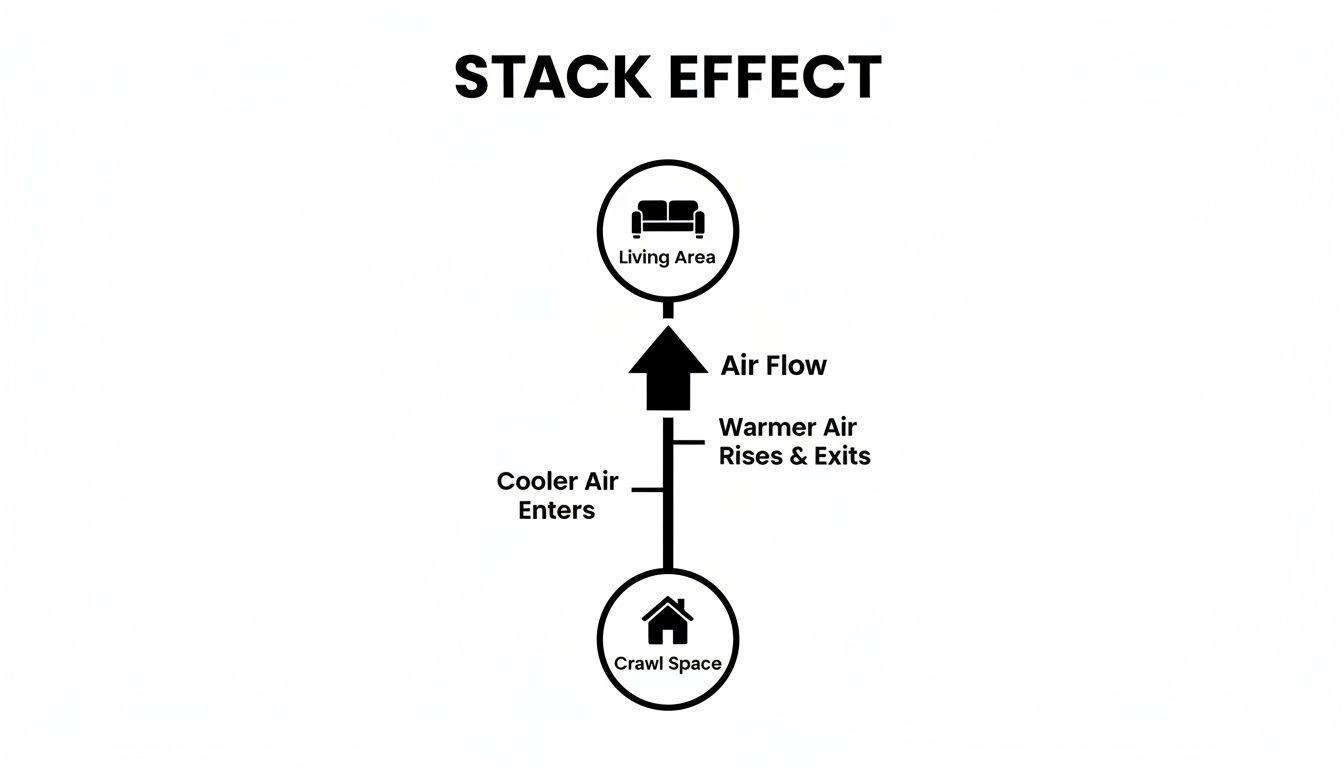
As you can see, whatever is hanging out down there—humidity, dust mite allergens, musty odors—gets pulled right into the spaces where you live and breathe every day.
The Definitive Solution
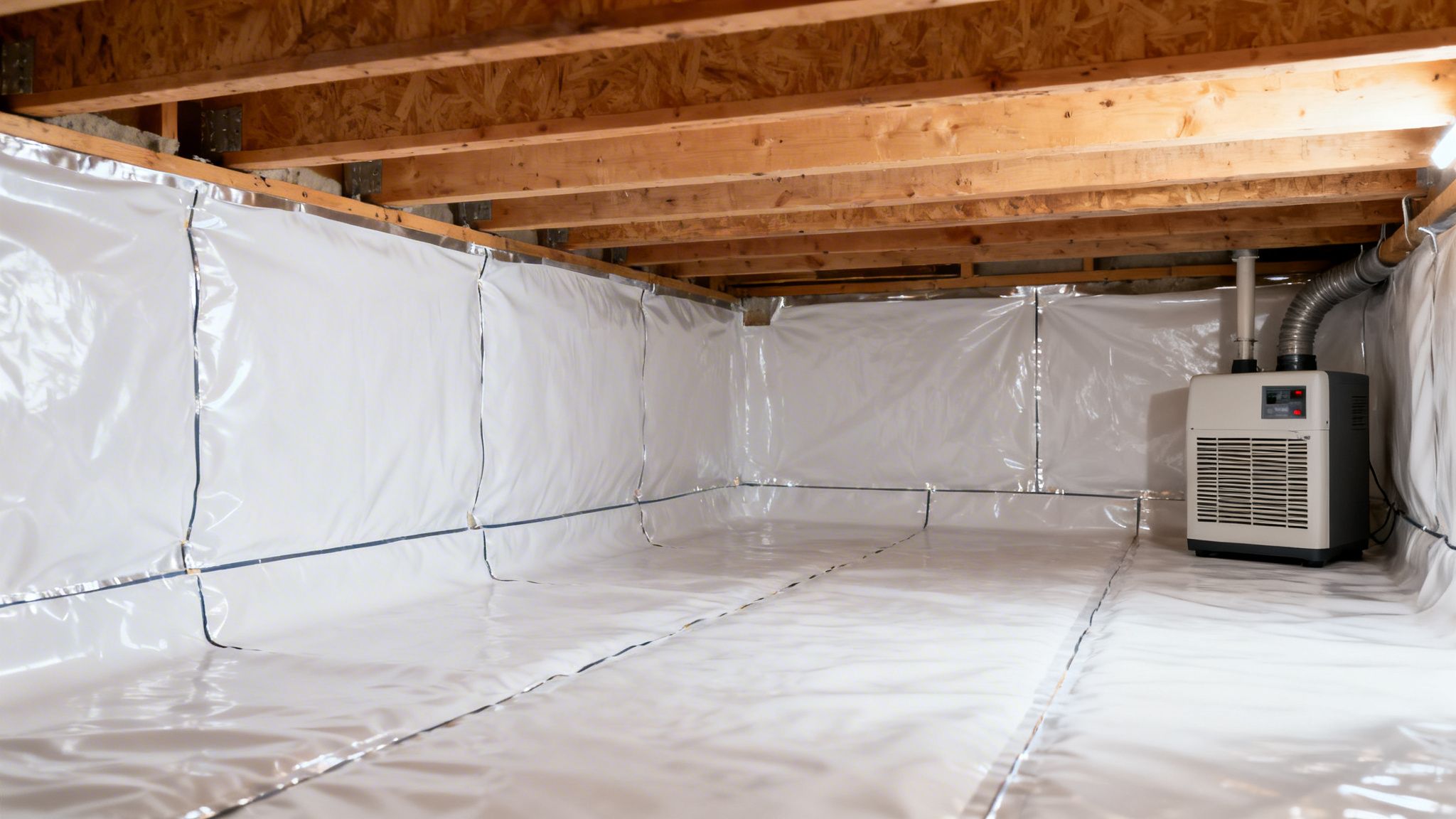
Crawl space encapsulation is the single most effective way to solve this. We seal off the vents, insulate the walls, and lay down a heavy-duty vapor barrier across the entire floor. This creates a clean, dry, and controlled space under your home.
Essentially, we're closing that "open window" for good, stopping the flow of nasty air at its source. You can dig deeper into what causes these issues in our guide to common sources of crawl space moisture problems.
Encapsulation transforms your crawl space from a source of problems into a stable foundation for a healthier, more comfortable, and energy-efficient home. It is a proactive investment in your property's integrity and your family's well-being.
Lower Your Energy Bills and Reclaim Your Comfort
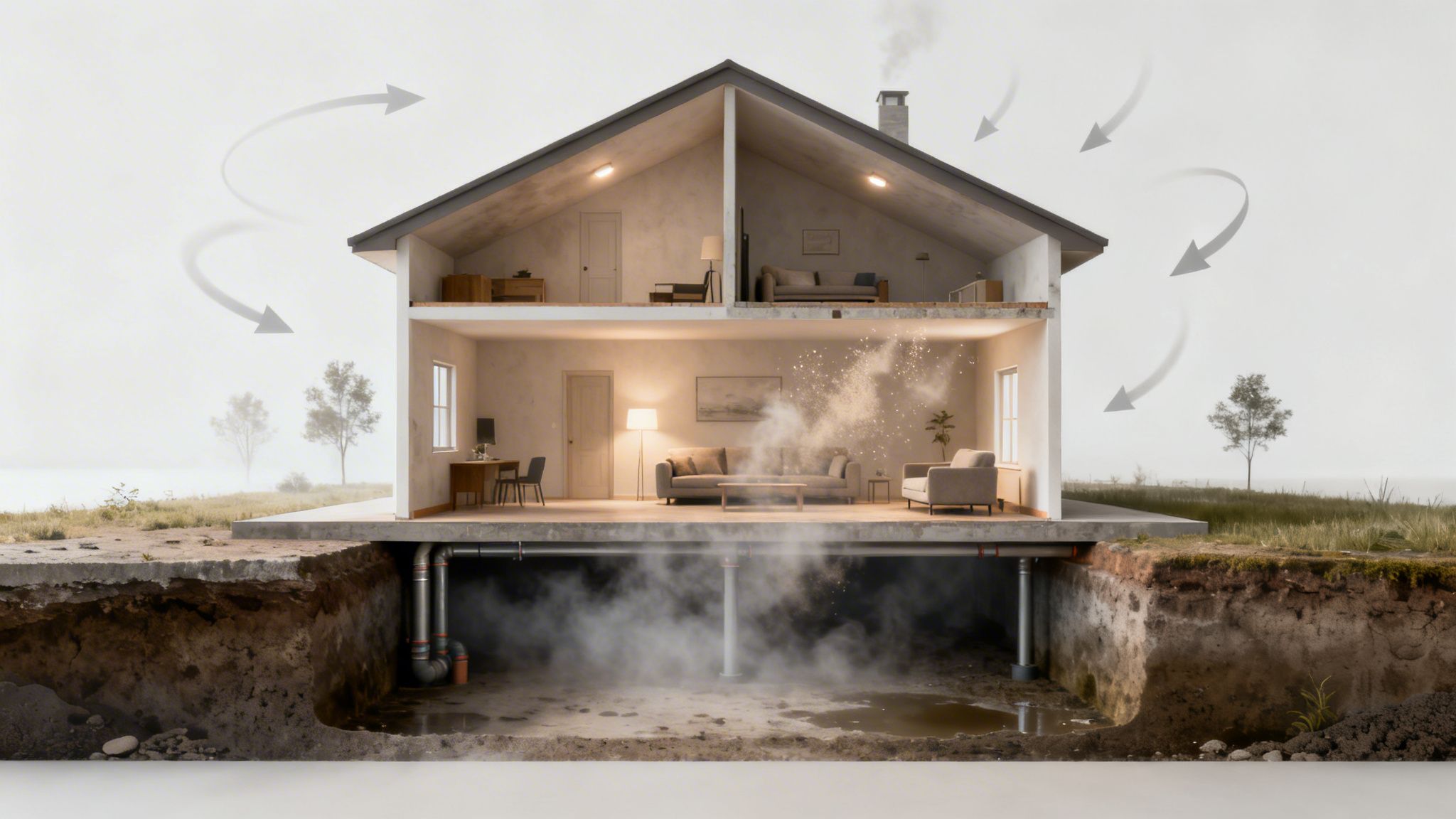
Does your HVAC system seem to be running nonstop, but your home never quite feels comfortable? The problem might not be the unit itself. More often than not, an unsealed crawl space is forcing your heating and cooling system into a constant, losing battle against the air seeping in from below.
Think about trying to keep a room cool with a window wide open on a blazing hot, humid day. That’s exactly what’s happening under your house. The air pulled into your living space is often damp and at an extreme temperature, forcing your HVAC to work overtime just to keep up. That constant effort shows up directly on your energy bills.
Halting The Energy Drain at Its Source
Crawl space encapsulation is the solution that effectively closes that "open window" under your home. By sealing off the vents, insulating the foundation walls, and laying down a heavy-duty vapor barrier, we completely transform the space. It goes from being a liability to a stable, semi-conditioned buffer zone that’s no longer at the mercy of the weather outside.
This controlled environment stops the energy drain right where it starts. Your HVAC system is no longer fighting a steady stream of cold winter air or humid summer air being sucked into the house. The benefits here go way beyond simple moisture control—they directly upgrade your home's thermal efficiency.
By creating a conditioned space beneath your home, encapsulation allows your HVAC system to operate the way it was designed to—efficiently. This change leads to significant reductions in runtime, less wear and tear on your equipment, and real, noticeable savings on your monthly utility bills.
This isn't just a small tweak; the improvement in efficiency is dramatic. In fact, it's common for homeowners to see their energy bills slashed by up to 20% after encapsulation. Let's look at a quick comparison to see what that change looks like in practice.
Energy Savings Vented vs Encapsulated Crawl Space
This table illustrates the practical differences you can expect after encapsulating a typical vented crawl space in our humid Southern North Carolina climate.
| Feature | Vented Crawl Space (Before) | Encapsulated Crawl Space (After) |
|---|---|---|
| HVAC Runtime | Runs frequently, struggles to maintain set temperature. | Shorter, more efficient cycles; easily maintains temperature. |
| Indoor Humidity | High, especially in summer, leading to a clammy feeling. | Consistently lower and more comfortable humidity levels. |
| Floor Temperature | Cold floors in winter, feels damp in summer. | Floors are noticeably warmer in winter and comfortable year-round. |
| Energy Bills | Consistently high due to constant HVAC operation. | Up to 20% lower due to improved thermal efficiency. |
| Air Quality | Musty odors and allergens pulled into the home. | Cleaner, healthier air; no "crawl space smell." |
As you can see, the shift from a vented to an encapsulated crawl space isn't just about sealing a few vents—it's a fundamental upgrade to your home's entire performance envelope.
The Tangible Comforts of an Encapsulated Space
The financial savings are great, but the immediate improvements in your daily comfort are just as rewarding. You'll feel the difference almost immediately.
Here’s what our clients often tell us they notice first:
- Warmer Floors in Winter: No more tiptoeing across icy floors in the morning! The cold ground is no longer chilling your subfloor.
- Reduced Indoor Humidity: During our sticky Southern North Carolina summers, encapsulation makes your home feel cooler and far more pleasant.
- Consistent Temperatures: With the thermal boundary of your home finally secured, you’ll find fewer drafts and more even temperatures from room to room.
By investing in professional crawl space encapsulation services, you aren't just fixing a damp, dirty space. You’re making a strategic upgrade that pays you back every month in both comfort and savings.
Let's be honest, it's a pretty unsettling thought: a huge chunk of the air you're breathing inside your house isn't coming from an open window. It's seeping up from your crawl space. Thanks to something called the "stack effect"—which is just a fancy way of saying hot air rises—up to 50% of the air on your first floor can actually start out from beneath your feet.
If that space is damp, dirty, and musty, guess what the air circulating through your living room and bedrooms is like? Yep. Same.
A dark, damp, unsealed crawl space is basically a five-star resort for things you really don't want in your home. Mold, mildew, and dust mites absolutely thrive in high-humidity environments. And they don't just stay down there; their microscopic spores and allergens get pulled right up into your main living areas with the natural airflow of the house.
This constant stream of invisible junk can have a real, noticeable impact on your family’s health. For a lot of people I talk to, fixing this is the single most compelling reason to get their crawl space encapsulated.
Cutting Off Allergens at the Source
Ever feel like someone in your family is always sick? If you're dealing with persistent allergies, asthma, or other respiratory issues, your crawl space could be the culprit you're not seeing. These invisible threats create a frustrating cycle of irritation that’s hard to break.
Here are some of the most common health issues we see linked to poor crawl space conditions:
- Constant Allergy Symptoms: Sneezing, coughing, and itchy eyes that just won't quit, often caused by mold spores and dust mite waste.
- Worsening Asthma Attacks: Airborne particles from a nasty crawl space are a major trigger for asthma.
- General Respiratory Discomfort: That feeling of always being a little stuffed up, or even getting more sinus infections, can be from breathing in damp, mildew-filled air all the time.
Encapsulation isn't just a repair; it's a proactive step that completely changes the environment where these problems start. Think of it as a direct investment in your family's well-being.
By rolling out a complete vapor barrier and installing a dehumidifier, we cut off the moisture that mold, mildew, and dust mites need to survive. It's that simple. You stop the source, and you stop the problem, purifying the air from the ground up.
Creating a Healthier Home Environment
Once the crawl space is encapsulated, it stops being a source of contamination and starts being a clean, stable part of your home. The heavy-duty liner keeps ground moisture out, and a properly sized dehumidifier keeps the air dry and consistent.
What does this mean for you? Instead of pulling up musty, allergen-filled air, your home's natural airflow will now circulate cleaner, drier air. It's a change people often feel almost immediately. Allergy and asthma symptoms can lessen, and that persistent musty smell that you might have gone "nose blind" to finally disappears.
It all comes down to this: a clean crawl space is the foundation of a healthy home.
Protect Your Foundation from Moisture and Pests
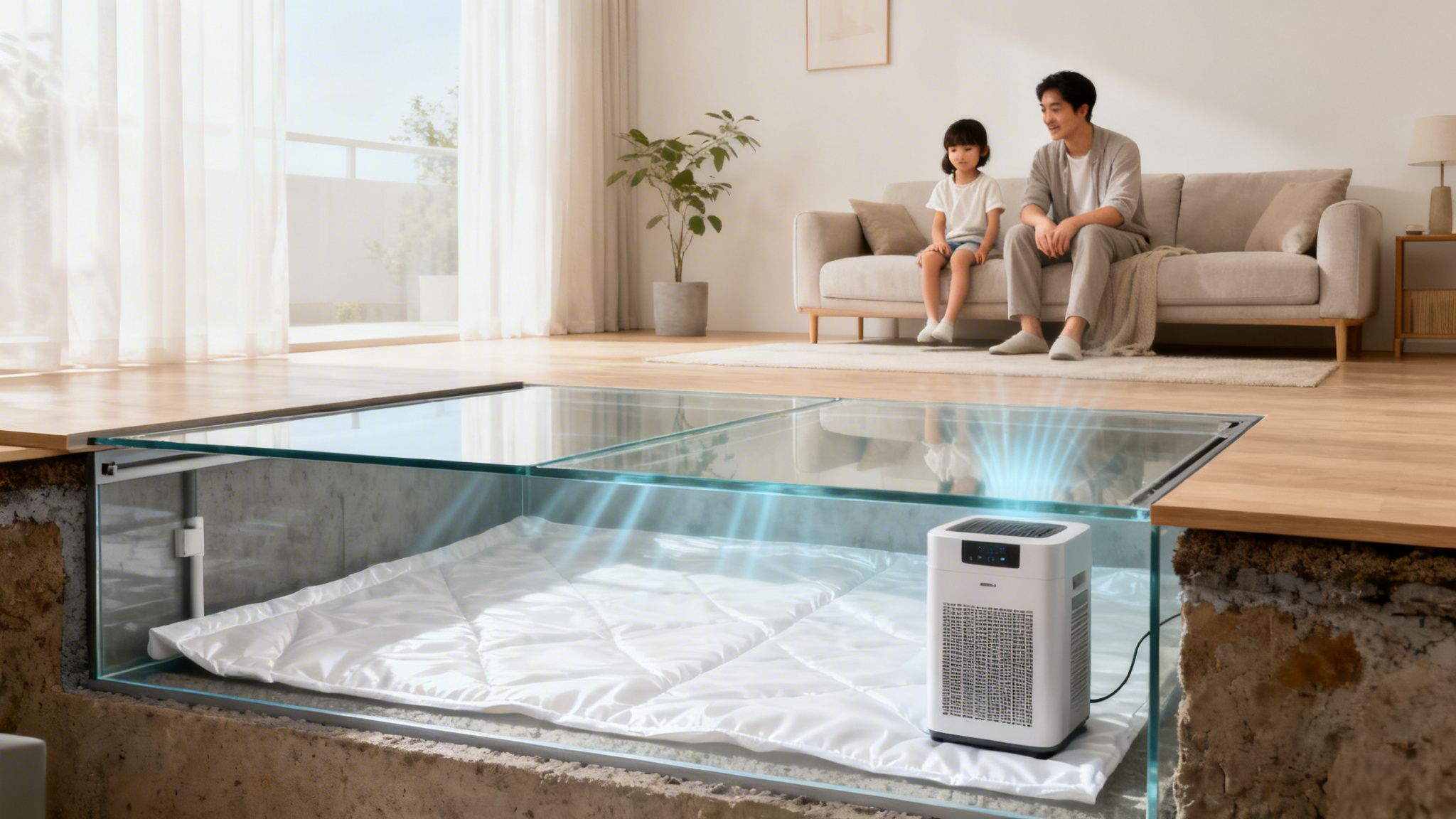
If there's one single thing that threatens your home's structure, it's moisture. And for most homes, an unsealed crawl space is the main entry point for that threat.
Think of the wooden beams and floor joists holding up your house like a dry sponge. In the damp, humid climate of Southern North Carolina, a traditional crawl space exposes that "sponge" to constant moisture from the ground. Slowly but surely, those critical supports start soaking it all in.
This never-ending dampness is the perfect recipe for wood rot, a nasty fungus that literally eats away at the wood fibers, weakening your home's support system from the inside out.
Safeguarding Your Home’s Structural Skeleton
What might start as a simple damp spot can spiral into much bigger problems. We’re talking sagging, bouncy floors and, in the worst-case scenarios, major structural failure. Trust me, the repair bills for that kind of damage are enough to make anyone’s head spin, which makes getting ahead of the problem an absolute must.
Crawl space encapsulation is your best defense. It creates a dry, controlled environment that completely halts this destructive cycle. By cutting off the wooden structure from ground moisture and humid air, you stop the decay right in its tracks and protect your home's skeleton for years to come.
The data doesn't lie: unchecked crawl space humidity can lead to structural issues like sagging floors, which can set you back anywhere from $5,000 to $20,000 to fix. By installing a full vapor barrier and properly managing humidity, encapsulation pretty much eliminates these risks—and the massive costs that come with them.
Creating an Uninviting Environment for Pests
Moisture doesn’t just invite rot; it’s basically a welcome mat for all sorts of destructive pests. Termites, carpenter ants, rodents, and other critters are all drawn to dark, damp places with soft, moist wood. An open, vented crawl space is their version of a luxury resort.
And they don't just hang out under the house. They can easily find their way up into your walls and living areas, causing even more damage and creating a seriously unhealthy environment for your family.
Encapsulation is more than a moisture barrier; it's also a pest barrier. By sealing off entry points and creating a dry, clean space, it makes your home far less attractive to unwanted guests who depend on damp conditions to survive.
This extra layer of protection is a game-changer. It helps shield your home from infestations that are notoriously difficult and expensive to get rid of. When you look at it that way, encapsulation isn't just another home expense—it's a smart, proactive investment in your property's value and health. For more on this, check out our resources on effective foundation maintenance.
Warning Signs Your Crawl Space Needs Help
How can you tell if the problems you’re seeing upstairs are actually starting down below? It’s a fair question. The signs are often subtle at first, but over time, they can become impossible to ignore. Your home has ways of telling you when moisture is brewing beneath the floorboards.
Catching these red flags early is the key to stopping a minor headache from turning into a major, costly repair. Think of this as a practical checklist to help you figure out if your crawl space is crying out for help. Each symptom points directly back to the real culprit: uncontrolled moisture.
Unmistakable Musty Odors
The most common—and immediate—sign of a troubled crawl space is that distinct, musty, “old house” smell. If you keep noticing a lingering earthy or mildew-like odor in your main living areas, especially on the first floor, that's a huge clue that mold and mildew are growing right under your feet.
Thanks to a little something called the "stack effect," that damp air is constantly being pulled upward into your home, bringing those funky smells with it. This isn't just an annoyance; it's a direct symptom of poor air quality coming from your crawl space.
High Indoor Humidity and Condensation
Does your home feel sticky and damp, even with the AC running full blast? Persistently high indoor humidity is a classic sign that your crawl space is pumping excess moisture into your living environment. It’s like having a giant, unwanted humidifier running 24/7.
You might also notice condensation—or "sweating"—on your ductwork, pipes, or even the inside of your windows. This happens when warm, humid air from the crawl space hits cooler surfaces, proving the moisture levels are way too high for a healthy home.
A healthy home should have a relative humidity level between 30% and 50%. When it’s consistently higher than that, you’ve likely found a significant moisture source that needs to be dealt with, and the crawl space is the usual suspect.
Visible Signs of Trouble
Sometimes, the evidence is right there in plain sight. If you’re feeling brave, grab a good flashlight and peek into your crawl space access point. Look at the wooden joists and the underside of your subfloor.
Keep an eye out for these visual cues:
- Visible Mold or Mildew: Look for splotchy white, black, or greenish patches growing on the wood. It’s not just dirt.
- Efflorescence: See a white, chalky residue on the concrete or masonry walls? That’s a tell-tale sign of water seeping through the foundation.
- Pest Activity: Finding evidence of insects or rodents is another major red flag. They love dark, damp environments and see your crawl space as a perfect home.
Soft or Bouncy Floors
Your floors should feel solid under your feet. Period. If you walk across a room and notice areas that feel soft, spongy, or unusually bouncy, it's a serious warning sign.
This often means the wooden subfloor and the support joists have started to rot and weaken from constant exposure to moisture. It’s not just a weird feeling—it’s a direct threat to your home's structural integrity.
Why a Professional Installation Matters
It’s tempting to think of crawl space encapsulation as a weekend warrior project. I get it. But this isn't like painting a room or hanging a new light fixture—it's a highly technical job where every single detail has to be perfect.
An improperly installed vapor barrier with gaps, sloppy seams, or the wrong kind of plastic can actually do more harm than good. Instead of keeping moisture out, you end up trapping it right against your home’s wooden structure. That’s a recipe for disaster.
Frankly, a professional installation is the only way to guarantee you get all the benefits we've been talking about. It’s not just about laying down some plastic sheeting; it’s a whole system designed to create a completely sealed and controlled environment under your house. Doing it right requires a deep understanding of everything from material science to local building codes.
The Difference is in the Details
So, what separates a quality encapsulation that lasts for decades from one that fails in just a few years? It really boils down to two things: professional execution and superior materials.
An expert installation always includes:
- Industrial-Grade Materials: A pro is going to use a thick, puncture-resistant vapor barrier—think 12-20 mil—that is worlds apart from the flimsy plastic you find at a big-box hardware store.
- Seamless Execution: Every seam gets meticulously overlapped and sealed with specialized, aggressive tape. The barrier is then mechanically fastened to the foundation walls, creating a truly airtight seal that won't peel away.
- Proper Drainage and Dehumidification: An experienced contractor knows how to assess your specific drainage needs and install a correctly sized dehumidifier. This ensures the system actively manages humidity levels for the long haul, not just for the first few months.
A professional job ensures the system functions as a single, cohesive unit. From the ground preparation to the final dehumidifier setting, every step is performed to create a durable and effective barrier that protects your home and your investment.
Trying to cut corners with a DIY job or a cheap handyman often leads to premature failure, hidden moisture problems, and honestly, just wasted money. The peace of mind that comes from knowing the job was done right is invaluable.
Choosing the right team is just as important as deciding to encapsulate in the first place. You can learn more about what to look for by reading our guide on how to choose a general contractor. An expert ensures your investment pays off with better air quality, lower energy bills, and a protected foundation for years to come.
Common Questions About Crawl Space Encapsulation
When you start thinking about something like crawl space encapsulation, it’s only natural for a bunch of questions to pop into your head. It’s a big project, after all. Getting straight answers is the best way to feel confident you're making the right call for your home. We've pulled together the questions we hear most often from homeowners right here.
How Much Does Encapsulation Typically Cost?
This is usually the first question on everyone's mind, and the honest answer is: it varies. The final investment really depends on a few key things. The size of your crawl space is the biggest factor, followed by its current condition—do we need to handle mold or make repairs first?—and the specific materials we use for the job.
As a ballpark, most homeowners can expect the cost to land somewhere between $5,000 and $15,000. It's a significant home improvement, no doubt, but it’s one that pays you back. You'll see it in your energy bills and feel it in your peace of mind, knowing you’ve dodged potentially massive structural repair costs down the road.
How Long Does The Installation Process Take?
You might be surprised at how quickly a professional crew can get this done. For a typical home, we can usually have the entire project wrapped up—from the initial prep work to firing up the new dehumidifier—in just one to three days.
Of course, if we're dealing with a massive crawl space or one that needs a lot of TLC before we can even start, it might take a bit longer. But our goal is always to get in, get the job done right, and get out with as little disruption to your life as possible.
Is a dehumidifier always required for an effective system? Here in the humid climate of Southern North Carolina, the answer is a firm yes. That dehumidifier is the heart and soul of the system. It's what actively pulls moisture from the air, keeping your crawl space at a healthy, consistent humidity level below 50% all year long.
Does Encapsulation Increase My Home's Resale Value?
It absolutely does. Think about it from a buyer's perspective. An encapsulated crawl space is a huge selling point. It’s a clear signal that this is a well-cared-for home—one that’s energy-efficient and free from the moisture, mold, and pest problems that plague so many other houses on the market.
This upgrade doesn't just protect your home while you live there; it makes it stand out when it's time to sell. It addresses major concerns for today's savvy homebuyers, which can often lead to a higher final sale price and less time sitting on the market.
Ready to transform that damp, musty crawl space and protect your biggest investment? The expert team at FHP Contracting is here to walk you through it, providing a comprehensive consultation to build a solution that truly lasts. Contact us today to schedule your free estimate and take the first step toward a healthier home.